The Mysterious Case of the Alperton Angels

By Janice Hallett

I raved about Hallett’s The Appeal earlier this year, but I’m savoring this one even more! The Alperton Angels uses the same epistolary style of collected emails, texts, and memos, but whereas The Appeal was more cozy mystery, this is religious suspense thriller, which is absolutely my bag. The same style that worked so well to bring out the humor in small community theater works equally well at building brewing creeping dread.

The first page sets the premise: you have access to the following collection of documents, do you take them to the police or hide them away forever? And when I first started, I wondered, what on earth would lead me to cover up a brutal murder?! Well, the presence of the antichrist might… (that’s a teaser, not a spoiler). The documents are the collected emails, texts, and transcribed interviews of a true crime author researching her latest project: years ago two teenagers rescued a baby from a doomsday cult that claimed it was the antichrist and planned to kill it to save the world. The cult itself was then found dead by ritual suicide by the cops that responded to the teen’s emergency call. After the first rush of news stories, with some suspicious discrepancies, the story went quiet and the teens and baby seem to have disappeared.

Our central author is approached by her publisher to revisit the story, and to pique the public’s interest, find the baby, who would be turning 18 this year. As she follows the various leads, more and more isn’t adding up, and then a competing author joins the search as well. That’s about as much as I want to say; since the mystery goes in so many different directions, anything else could be mild spoilers. There were so many twists and turns at the end, it was getting a little ridiculous, but I loved every one of them!

Unexpected Night

By Elizabeth Daly

This book is a trip — not exactly good by today’s standards, but very entertaining! First published in 1940, Daly is a contemporary of Agatha Christie, though not nearly as prolific or renowned. I was going to give Daly some extra credit for avoiding the n-word where Christy would absolutely have used it, but she follows up later with some blackface and different (less charged?) slurs, so I guess there’s that.*

The narrative structure and characters are certainly dated, but that was part of the charm for me. I was often kept guessing at the twists in plot, more because I don’t understand many of the lifestyles and character tropes of the time (why is everyone going out golfing the day after a suspicious death?!) than any planned surprise reveals, and occasionally I couldn’t understand what the characters were on about, with their contemporary slang. It adds a certain spice to the reading experience!

Unexpected Night introduces Daly’s primary detective, Henry Gamadge, an antique book verifier, who gets dragged into mysteries under the flimsiest of excuses. In this case, he is vacationing at a resort in Maine, coincidentally along with a casual friend of his, who’s family then becomes embroiled in the suspicious death. Like I said, Gamadge doesn’t have much of a connection, and I very much appreciated the variety of characters that were also puzzled at his involvement, including the long suffering sheriff.

Since this is her first published book and the first in the Henry Gamadge series, I’m guessing that some of the rougher narrative and character parts will get smoothed out, and I look forward to continuing the series.

*Well, I started the second novel in the series, Deadly Nightshade, and unfortunately it features depictions of “gypsies” so offensive I had to quit, so I guess that’s that.

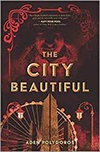
The City Beautiful

By Aden Polydoros

Published in 2021, Aden Polydoros notes in the afterward, “I wanted to write a book where the Jewish characters weren’t just passive victims, but where they fought back and rose above the people who wished to do them harm.” The political climate today is a little trickier, but it does feel like both Hamas and IDF are doing their best to erase the beauty of Jewish culture each in their own way. Polydoros, however, does a powerful job of capturing the complexity of Jewish immigrant experience, in this case in Chicago in the late 1800s.

The City Beautiful packs in a lot, actually – it is a YA historical fantasy murder mystery, tying together the historical realism of immigrant life in the Chicago tenements with Jewish folklore in an enthralling story. Years after a traumatic Atlantic passage and the death of his father, Alter Rosen is focused on staying out of trouble and earning enough money to bring his mother and sisters to America. The disappearance of young men in his neighborhood is common enough that he doesn’t pay it much heed until his roommate and unrequited crush is found drowned. When preparing the tahara, the ritual purification ceremony for dead, he is taken over by the other boy’s dybbuk, or vengeful spirit, and driven to uncover the murder in order to free himself and lay the spirit to rest.

He is assisted by friends and neighbors who all represent varied facets of Jewish and immigrant experiences, occasionally in conflict with each other. The novel captures how messy and uncontained life is, and by contrast how false and damaging stereotypes and propaganda are, even if they seem more easily digestible on the surface. At a more basic level, it is also an absolutely thrilling mystery and ghost story, and a sweet YA-appropriate romance.

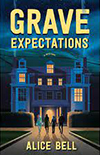
Grave Expectations

By Alice Bell

I guess I just really love the very specific premise of a real psychic, who finds it easier to pretend to be a fake medium, has to solve a murder mystery in an old English country estate, because I loved A House of Ghosts and I loved this one! Despite the obvious similarities above, Grave Expectations has a much lighter, quirkier tone, at least partially due to the modern setting.

30-something Claire has been ‘haunted’ by her best friend ever since Sophie was mysteriously murdered when they were both in high school. This has clearly been a mixed blessing for both Claire and Sophie, but they have settled into a relatively routine life at the novel’s start. Claire makes a basic living as a medium, using Sophie mostly just to eavesdrop and dig through personal items for information.

Claire and Sophie are very reluctantly drawn into a murder investigation by a recent ghost, and their apathy is only matched by their ineptness, which makes for some really excellent comedy. Oddball members of the deceased’s family, both living and dead, join in the investigation, adding to the general hilarity. Halfway through, I was already hoping this is the start of a series.

I was snorting and giggling along, and was completely blindsided (in a good way) by the surprising pathos of the crisis point, when the author gives us a peek into the much more realistic trauma of two women struggling to come to terms with one of their unnatural deaths. I’m only a little ashamed to admit that I teared up. …And then we were back to slapstick reveal and denouement, poking fun at many of the traditional murder mystery tropes! I would have expected it to have felt uneven; it was jarring, but in a really skilled way that used the precarious balance of comedy and drama to strengthen the impact of each.

Christmas Stories

As I get older, I find I have to work a little harder to generate a holiday spirit among all the daily life stressors and nonsense, so I like to gear up with some seasonal reads:

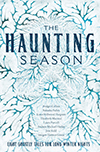
The Haunting Season: Eight Ghostly Tales for Long Winter Nights

I bought this because it includes a Natasha Pulley story about Keita and Thaniel from her Watchmaker of Filigree Street series, which I adore. The general reader reviews are mixed, with many readers saying that Pulley’s story was the weakest since it doesn’t stand alone if you aren’t familiar with the characters. Being well familiar with the characters, though, my experience was the opposite: I very much enjoyed Pulley’s story, always happy to get more of Keita and Thaniel, but was disappointed in the other stories.

Perhaps it was because I was already familiar with Pulley’s characters, but they were the only ones that I actually liked. Most of the other stories featured either selfish or delusional characters, I suppose to ‘justify’ the hauntings one way or another? The plots also seemed overly complicated and obtuse, so each story ended just as I felt like I was starting to get a feel for it.

Sentenced to Christmas

By Marshall Thornton

Marshall Thornton writes the most ridiculous rom-com and cozy mystery plots featuring a cast of hilarious dirtbag characters, and I get a real kick out of his books. As befits the title, the plot of this book is absolutely ridiculous: arrested for burning down the patriotic Christmas tree in front of a conservative talk radio station, our protagonist Gage is sentenced by a crackpot judge to spend Christmas with the prosecuting assistant district attorney (his own defense attorney being Jewish) in order to “learn the true meaning of Christmas.”

The thing about Thornton, though, is that his dirtbag characters then often react with more realistic cranky befuddlement, and it is consistently laugh-out-loud funny. Only one thing stops me from wholeheartedly recommending this: Gage’s friend and assistant is introduced as non-binary, and that being a point of contention with their family, especially around the holidays. Unfortunately, Thornton presumably forgot, and uses she/her pronouns for them for a chunk of the middle of the book. I am confident that it is an unintentional writing error, and amazon reviews mention that some editorial errors have been fixed, so hopefully this is no longer a caveat.

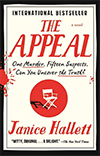
The Appeal

By Janice Hallett

Ooh, this book is so good, I started recommending it when I was only halfway through — and I was already halfway through after staying up far too late on the first day of reading. Told entirely through emails, texts, and memos, I never thought I would audibly gasp (and giggle) so many times at the contents of an email!

The communication is primarily among a small community theater group, who become increasingly unhinged under the stress of trying to raise money for an experimental cancer cure for the director’s grandchild. Nothing is quite as it seems, and my speculations and allegiances shifted with each new message. There’s not much more to say without getting into spoilers, and so much of the fun of the book is watching it all unfold, so I’ll keep this short.

One reassurance: though the tagline says “One Murder. Fifteen Suspects. Can You Uncover the Truth?” it does not in fact make you, the reader, solve the mystery, which had been a slight concern of  mine — the book ties up all loose ends very nicely (that said, Kinsey and I had slightly different interpretations of the final ending).

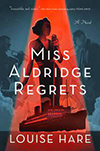
Miss Aldridge Regrets

By Louise Hare

I have very mixed feelings about this book. The central mystery is fiendishly clever, slowly revealed with each chapter and interspersed with short narratives from the unnamed murderer, which tease the identity and motive. Having witnessed the murder by poison of her boss in a London nightclub, Miss Lena Aldridge jumps on the offer of a role in a Broadway musical, accompanied by a first class ticket on an ocean liner to New York. She is reluctantly pushed into companionship with a wealthy family shortly before the patriarch dies by poison, and (minor spoiler) she seems perfectly positioned to take the fall for it.

For much of the book, I was on the edge of my seat, since it seemed impossible that Lena would be able to extricate herself from such a clever trap, especially since, as the murderer describes her on the first page, “She may have possessed both common sense and ambition, but from what I’d learned about her, she rarely used the two together.”

As the book went on, I wasn’t that confident that Lena possessed much common sense, actually. She is sympathetic but not particularly likeable. She sort of drifts through life, drinking far too much, thinking of herself when she should be thinking of others, and thinking of others when she should be most concerned with herself. She is caught completely off guard by the end reveal, and unfortunately so was I, since it was a solution that I’d already dismissed as being both too obvious and nonsensical.

Basically, the end fell so flat that it soured the rest of the book for me. Because I’d been previously so engrossed in the events, the finale was even more of a disappointment. There were also themes of racism, colorism, sexism, and classism woven throughout, but they became so heavy handed in the ending that they reminded me of, not even freshman 101 classes, but the dorm discussions in afterhours that we thought were so deep. Perhaps I’m just getting jaded as I get older.

Everyone in My Family Has Killed Someone

By Benjamin Stevenson

I was very amused that Kinsey had recommended this in her review of Hench, since I was reading it at that very moment! I enjoyed it enough that I should check out Hench and the others she listed as well. And, I don’t think I really should have enjoyed this book! It is chock full of literary elements that I normally find frustrating or off-putting, like heavy foreshadowing or winky meta narration. I often find that meta concepts in books take away from the emotional impact, that as a reader one is then too focused on the conceit of the writing structure to get really immersed in the narrative. Benjamin Stevenson manages to capture both, though.

There’s a couple layers of conceits, too. The title is the most obvious: everyone in the narrator’s family has killed someone, or at least will have by the end of the book. When a body is found at the remote retreat hosting the family reunion, suspects are everywhere. Ernest, the narrator, is also an author of, not mysteries, but guides on how to write mysteries. As more bodies appear, he investigates his family, slowly uncovering a slew of past mysteries and secrets.

As narrator he’s a strict adherent of the rules established by the authors of the Golden Age of Detective Fiction, and extremely dismissive of the modern trend of unreliable narrators. Though he repeatedly swears to be upfront and truthful about everything, he still manages to insinuate one thing before the story twists to something else. It is very clever, and I actually enjoyed more and more each time it happened.

There are also moments of surprisingly philosophical introspection, on all the different ways people can die and other people can take the blame or be blamed for those deaths. The ultimate end is quite a spectacle (that I imagine will translate well to television, if the proposed adaption goes through), and bends the classic rules in a letter-of-the-law-not-the-spirit kind of way.

The Prisoner

By B. A. Paris

I’m not even sure how to review this book, quite frankly. I definitely enjoyed it, but it was listed sort of vaguely as psychological thriller, and while it is that, it also read as decidedly YA. And I don’t mean that as a bad thing!

Well, not all the way, at least. The characters are two-dimensional enough that I kept waiting for a reveal beneath the surface that never came. However, a plot switcheroo halfway through the book reminded me strongly of Gone Girl, only as it would be written for children. It’s not a sophisticated book, so the switch didn’t come as a total shock, but it was still very satisfying, which I think represents the book well.

This would be an amazing book for a young teen or precocious tween, who feels ready for adult books but should still be somewhat eased into them. There are a number of tricks and schemes that weren’t the most subtle, but I still really enjoyed them, just in a sort of bemused way. There is no sex (though some non-specific mention of sexual assault in the past), no drug use, or even much swearing. There is violence, as befits a mystery and psych thriller, but not gruesomely described. I would have loved it and felt so mature if I’d read it at 14 or 15! (I was not a precocious tween.)

Once I had a clearer realization of the proper audience for the book, I enjoyed it even more and stopped looking for hidden meanings or nuance that wasn’t there. That said, I was pleasantly surprised that the author gave serious attention to the protagonist’s trauma response, instead of brushing it aside or romanticizing it, which I’d half expected.

Lavender House

By Lev AC Rosen

This mystery novel had shown up on several recommendation lists over the last few months, and it is well justified! Rosen beautifully takes the noir sensibility, which imbues generalized disenfranchisement, and applies it very directly and acutely to the LGBT community in 1950s San Francisco. It becomes a somewhat pointed critique of noir in general, I think, by contrasting what has typically been a general mental oppressiveness in the great noir writers like Chandler and Hammett, with actual systemic and malicious oppression against specific people.

Traditional noir characters sense a true darkness in the world that the general populace ignores or is blind to. In Lavender House, the gay characters only wish they had the option to ignore the ugliness of the world, instead of having it thrust upon them if they drop their defenses for a second. While San Francisco was just starting to be a budding haven for gay people, so there were more underground clubs and the like, the whole of the United States remained very dangerous.

Our protagonist, Levander “Andy” Mills is as aware of this anyone else. As a (closely closeted) gay cop, he is both threatened and the threat, and straddling that line, can trust no one. Before the start of the novel, however, he was discovered in a club raid, kicked off the force, and all but run out of town. He is getting drunk in a bar before throwing himself into the Bay, when Pearl comes to ask him to investigate the suspicious death of her wife. Pearl is the surviving matriarch of the Lavender House, where the now deceased scion of a wealthy soap family created a home where a handful of gay couples can live freely, while showing a much different face to the outside world.

Andy moves into the house in order to investigate, mostly with the idea that he has nothing left to lose at this point, but it opens his mind to a whole different world. And this is what I really loved about the book: it explores the seductive but false appeal of noir and cynicism. It’s a really interesting play on noir – the detective himself has bought into the ideological grimness, but the novel makes the effort to show that his cynicism, though not unfounded, is a blindness of sorts. He expects the worst from people, and while this protects him to a point, he closes himself off so no one can either hurt him or care for him. And then, worst of all, believes that is all there is to life.

I don’t think I’ve ever read a book before that did such of a good job of criticizing its genre so validly, while also perfectly exemplifying it. A very minor spoiler: the end is both satisfying and a poignant summary of the overall themes, with a hopefulness that would feel jarring after a traditional noir but feels like the point of the whole book here.