The Rest of 2012

When I read a really good book I almost always write it up on the blog, generally because I’m so excited I want to make everyone I know read it. However, when I looked back over the list of books I read in 2012 (yes, I keep a list, otherwise I can never remember) I realized that I read some awfully good things that never made it here. So, to wrap up 2012, here are the five best books I read this year that I never got around to mentioning.

1) How To Be A Woman by Caitlin Moran. This is such a fabulous memoir. Moran uses her own life story to make a lot of points about feminism, beauty, generally living life as a woman in this society. But she’s funny, while also being radical! She’s also hilarious on Twitter.

2) The Family Fang by Kevin Wilson. I feel like this book sells itself as story about family, yet at the end of the book I felt sort of repulsed by the whole idea of families. But it’s a fascinating book.

3) Bring Up the Bodies by Hilary Mantel. This is on everyone’s best of the year lists, for good reason. This one moved a lot faster than Wolf Hall, Mantel’s first book about Thomas Cromwell, but you need to read them both to make sense of it. I admit that Tudor history is an interest of mine, but the beauty of these books is that the characters are so well-drawn that the historical details are just a backdrop for Thomas’s story.

4) Angelfall by Susan Ee. The first in another series of YA post-apocalyptic novels. There is no shortage of these books out there, but I liked this one a lot. Dark, but an interesting premise in which angels are the cause of the destruction. It also takes an unexpected position on religion, and I’m intrigued with how future books will play that out.

5) Broken Harbor by Tana French. The fourth in French’s of mystery novels set in modern-day Dublin is actually less a mystery and more the portrait of a family falling apart. My favorite of her books is still The Likeness, the second book, but they are all completely compelling and very, very well-written. There are connections between the books, but they are not a series, really, and they can all stand alone. Feel free to start with whichever one sounds most interesting.
Gone Girl

I am fully aware that recommending Gone Girl at this point is like making sure that everyone knows that Apple makes a nice phone. Gone Girl, by Gillian Flynn, seems like the book of the summer and everyone has read it/is reading it/is recommending it. Well, that’s because it’s AWESOME. I picked it up to read on a business trip, thinking that it was a sizable enough book it should last few though a few days of work and travel. I started it when I got to the airport, read like a mad person, and finished it before I even got to my destination. It made summer afternoon air travel–which included thunderstorm delays, a drunk guy getting escorted off the plane, and a transfer in Charlotte (haaaate)–all seem enjoyable.

I don’t want to give away too much of the plot, but it’s the story of a woman who has gone missing, a la Dateline or 48 Hours or one of those awful-true crime shows. Did her husband do it? He claims to be innocent, but each chapter reveals a new bit of information that makes the reader swing back and forth between being sure he’s guilty and having no idea what happened. I believe that people call books like this “literary mysteries” or “literary thrillers,” maybe to try to make themselves feel better about reading a really exciting, plot-driven book? But there’s no need to worry on that front–it is a thriller, but what makes the book stand out are the really finely-drawn characters and focused writing. Even though your perceptions of the husband and wife are constantly changing, they feel like very complete, real people, and there is not an unnecessary word in the book. And the plot twists make the reading experience a bit like a roller coaster. The fabulous Linda Holmes from Pop Culture Happy Hour said that when she read this there was a point at which something happened, and she actually closed the book and hugged it. And I know exactly what point she’s talking about because I DID THAT TOO. My airplane seatmate thought I was crazy. I don’t care how many thrillers and mystery novels you’ve read, this one takes you to new places and does it in new ways.

I should say that this is not a happy books, and you end up spending hours of time with unlikeable people doing despicable things. I felt sort of icky when I had finished, but I was enthralled the whole time. If you have a plane flight or jury duty or just a free weekend day coming up, and you need a book that will make eight hours feel like nothing, Gone Girl should be at the top of your list.

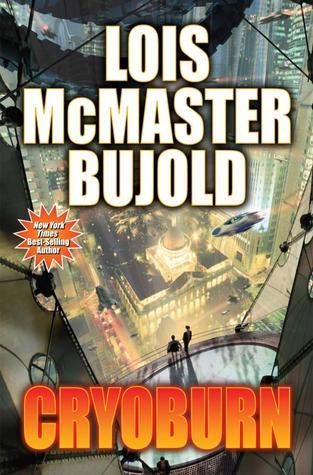
Cryoburn by Lois McMaster Bujold

Cryoburn
By Lois McMaster Bujold
2010

So I finally got around to reading Cryoburn, which is a ludicrous statement for me to have made. I adore Bujold. I discovered her about fifteen years ago and have read her books ever since. She has three different series, set in three wildly different universes, each of which I love. I have read everything she has ever published and loved them all. She was the first author for whom I actually started purchasing new-released hardcover books and even now is one of only four authors for whom I have done that. So why, then, did it take me nearly two years to read this book, checking it out from the library?

When it was first announced, I was super excited. A few months before it was finally due to be published, the publisher posted the first several chapters online as a teaser and I raced over to read them… and found myself kind of, well, bored.

First of all, this is the fifteenth book set in this universe and the eleventh book following the adventures of Miles Vorkosigan. And it is the first book in which there is no major character development.

It makes a certain amount of sense. Miles was introduced in The Warrior’s Apprentice (incidentally, that book (awesome-awesome-awesome) is available for free online, because both Bujold and Baen Publishers are very cool) as a high-born teenager in a military culture who failed to pass the military entrance exam due to physical disability despite all the nepotism in the world. He’s an awesome character: a brilliant, hyperactive dwarf with brittle bones, a lot of high-ranking family connections, and a deep desire to prove himself. It gets him into and then out of So Much Trouble.

But he does, slowly and painfully (and awesomely!), grow up. He grows into himself and faces set backs and failures and grows into himself again and changes who he is and what he wants and if the teenage years were hard, the twenties were driven, and the thirties were vicious, but now he’s settled. He’s happy with who he is and where he is and what he’s doing.

This makes me very happy for him.

But, well, there’s a reason most stories end with the whole “happy ever after” summary of the rest of characters’ lives. Happy settled people aren’t really as interesting as manic, driven people.

Now, character development isn’t the only thing that Bujold does fabulously well.  Her world-building is amazing and rich and deep. Her plot lines and mysteries are complex and tricky and hilarious. And Miles does remain an excellent character and driven in his investigations once they get going.

Cryoburn absolutely demonstrates Bujold’s skills at both science-fiction world-building and tricky plotting. The problem is that since the storyline is a mystery, and the reader only sees Miles’ discoveries as he’s making them, it takes a while for both Miles and the reader to get the momentum going.

Once it gets going, though, the book is excellent. I love the twisty plots and plans and characters and Miles’ manic investigation into them all.

It occurs to me that this book actually might work best as a stand-alone, without having read any of the previous books in the series, and thus coming to it without expectations.

The only thing that needs real background to get the full impact is the epilog, after all the plot ends have been tied up. The epilog, oh, the epilog: it hits like a punch to the sternum and makes my heart skip a beat. (You do need to have read the series to get the full impact, but oh, my heart, oh Miles, oh Bujold, love-love-love!)

So expect to slog a bit through the beginning, but the later two-thirds are really, really good.

Too Hot to Read

I’ve been struggling to write an entry the past couple of weeks. It’s been so hot and miserable that I’m hardly motivated to do anything more than slowly sip a cold beverage while staring into the middle distance–even reading seems like a lot of work–and nothing I’ve read lately has been inspiring. I want to tell you about books that I love, but recently every book I come across is one I am basically okay with, they’re all fine, whatever. But other people seem to like all of these books, so let’s do a quick round-up:

Rules of Civility by Amor Towles–This has gotten rave reviews and it seems like something I should love–bright young things in New York City in the 1930s! And I did love the descriptions of what it was like to work as a secretary and eat at the Automat. But the main male character (who I guess I was suppose to be pining over?) was a total blank to me and the best friend seemed like a terrible friend that the main character was better off without. Plus, I felt like we were eternally on the edge of a more interesting story that we never quite got to–the book kept making allusions to the fact that the main character was Russian but had Anglicized her name to get ahead in the world, but we never learned anything about her family or why she did that or what the costs were. I wanted more. If you know the perfect glittering 30s book, let me know.

The Pirate King by Laurie King–This is the latest in the Mary Russell/Sherlock Holmes mystery series (short version: after Holmes retires to the country, he teams up with a young girl and they end up solving mysteries together). I ADORE the first three, but the later ones have seemed lightweight, like generic mysteries that could be solved by any generic characters. The first few books were so enjoyable because Holmes and Russell and their relationship was so clearly drawn, and I feel like that’s been lost a bit. Only for diehards.

Shape of Desire–Remember when I was talking about how much I love Sharon Shinn? I do still love her, but please don’t read this one. I think this is her attempt to get on the Twilight bandwagon, not with vampires, but by setting a supernatural romance-type story in this world. I am on board with supernatural romance, but this one felt like a twenty-page short story blown out into a whole book. Go reread the angel books instead.

Slow Love by Dominique Browning–A memoir about a woman who gets laid of from her job and finds herself seemed like it would be right up my alley. It’s subtitle is “How I Lost My Job, Put On My Pajamas & Found Happiness,” and doesn’t that sound fun? Eh. Way too much of the book was taken up by her whining about a relationship that ANYONE could have told her was pointless, and as far as I could tell, her happiness consisted of her using her enormous severance to retire to the vacation house she already owned. Less inspiring than I had hoped.

Here’s hoping that my upcoming beach vacation results in a whole stack of books I love and can heartily recommend.

Vanish in an Instant

By Margaret Miller

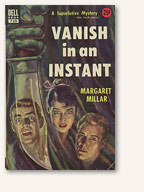
Book Cover: Vanish In An InstantI previously wrote about my love of pulp and noir mysteries, showcasing some of my favorites, and from the list, you can see that it is very much a man’s genre. Which makes sense, I guess; there weren’t as many published women at the time, and the kind of nihilism described in noir novels is kind of the antithesis of traditional femininity.

Margaret Miller is the exception, though, and she is brilliant. Vanish in an Instant, published in 1952, is my favorite, but I’ve read and enjoyed many of her other novels. The thing that makes Vanish in an Instant so exceptional that it is a love story in addition to a murder mystery, which should negate the noir style but only serves to emphasize it, as the two characters cling to their love as a fragile and temporary way to stave off the full bitterness of the world.

This quote captures Miller’s writing, and noir writing in general:

“Outside the wind was fresh, but he had a sensation of suffocating heaviness in his throat and chest, as if the slices of life he had seen in the course of the morning were too sharp and fibrous to be swallowed.”

Yay! I have no idea why this kind of writing gives me such satisfaction, but I do love these noir books and reading them actually brings me a sort of comfort in a way that I cannot analyze at all.

*I’d like to add that my copy is a reissue from the 70s and has much more subtle and attractive cover art.

— Anna

Siren of the Waters

One of my Christmas presents from my father this year was one of those page-a-day calendars. But instead of cartoons or a new German phrase each day (last year’s gift, which was awesome because instead of normal, touristy phrases, it included things like, “The sword was sharp and dangerous.”) this one recommends a book each day. If you’re wondering how this calendar could possibly appeal to everyone, the answer is that is throws in a little of everything. So far, it has recommended that I read Howard’s End, that Andre Agassi autobiography, and a non-fiction book about maps. I suspect that if you read all its books you would have an impressively wide array of knowledge and would be a killer Jeopardy player. I have no intention of reading all of these random books because I am super-picky about what I read (see also: why I am not in any book clubs), but each week there’s usually one thing interesting enough that I pin that day to my bulletin board, which is becoming a sort of messy to-read list. The first of the page-a-day books I have finished so far is Siren of the Waters by Michael Genelin.

Siren of the Waters is the first book in the Jana Matinova detective series. Jana is a detective in Slovakia, but she started her career in the police force in communist Czechoslovakia. While there is a traditional murder mystery driving the plot, the real heart of the book is in the descriptions of life under communist rule. The story is set in the modern day but features extensive flashbacks that show how the communist state dictated Jana’s professional life and crushed her family, and how only the well-timed fall of the Czechoslovakian government allowed her to continue in her career. The book is not touchy-feely in any way, so it doesn’t get into Jana’s emotions about all of this, but it does show the incredible level of change that ordinary people had to deal with as Iron Curtain fell. Part of the book also takes place in France, so there’s also some discussion of the tensions in the European Union as the poorer, more corrupt former communist states try to integrate themselves into the European community. I’m afraid that I’ve made this sound like an especially dull issue of The Economist, and it’s not at all. There is plenty of murder and intrigue to keep things moving along, but the book also shows how people’s everyday lives continue to be affected by the country’s political history

I found Siren of the Waters a little too bleak for me. Mystery is a genre that is so finely divided into sub-genres that you can pinpoint exactly what level of gore and darkeness you’d like to read about, and while I am not quite at the level of reading about mysteries solved by knitting circles (totally a thing), I prefer something a little less soul-crushing than this. But sometimes mystery series pick up the pace once all the scene-setting of the first book is done, so I might check out the second Jana Matinova book. It’s definitely an interesting way to learn some Eastern European history.

The Fabulous Clipjoint

By Fredric Brown

Let’s talk a little bit about Pulp Mysteries. I LOVE them, even though they are deeply offensive by most of today’s standards, and the mindset of a hardboiled detective is about as far from my own as it is possible to be.

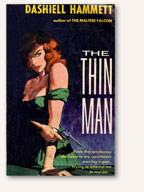
Book Cover: The Thin ManI was first introduced to them in high school, when my family went through a phase of watching movies from the 40s, including The Maltese Falcon, The Big Sleep, and The Thin Man. I went from there to reading Dashiell Hammett, who I absolutely love, and a little Raymond Chandler, who threw around the n-word enough to make me too uncomfortable to read most of his books.*

For a while, I looked for contemporary authors who also used the hardboiled style, and found Robert B. Parker (entertaining fluff that my mom accurately criticized for never allowing his characters to grow), Bill Pronzini (who has a nice gimmick of having a narrating detective who is never given a name), and my then favorite Joseph Hansen (featuring a gay insurance investigator who is as tough and stoic as any Sam Spade or Philip Marlowe).

Book Cover: Detective DuosSeveral years ago I picked up a collection of short stories titled Detective Duos, and was introduced to Fredric Brown’s Ed and Am Hunter, who immediately supplanted all other pulp mysteries in my heart forever. He wrote seven novels and one short story about the detective pair, all of which were published between 1947 and 1963 and are currently out of print, as far as I know. Tracking down each precious copy might have added just a little bit to my love of the series. (Much thanks to my wonderful sister for finding the seventh and rarest novel for me as a Christmas present a few years ago!)

In my opinion, Fredric Brown has not gotten the recognition he deserves as an author in any genre, though he is more known in the science fiction genre. I haven’t actually read any of those, but my impression is that they fit in fairly well with other contemporary science fiction novels, while his pulp mysteries really stand out from the rest.

The first book of the series, The Fabulous Clipjoint, introduces us to Ed Hunter, who is just 18 and teams up with his uncle, Ambrose “Am” Hunter, to solve the murder of his father. They live in gritty noir-ish Chicago, and feel the bitterness and cynicism of every other pulp detective, but Brown writes them with honesty and vulnerability that makes them more relatable and likeable than any other pulp mystery characters I’d read. I knew this book was something special when Ed makes a speech about wanting to have a drink of whiskey in honor of his dad, downs a hefty shot of whiskey, and promptly throws up.

Funny story, though: My first copy of The Fabulous Clipjoint ended with a plot dead-end with the detectives stumped, and I was a little taken aback but impressed at Brown’s moxie at showing that real-life mysteries don’t always end in tidy packages. Then, I ran across another copy in a used book store, and realized that my first copy was missing the last third of the book. The actual ending isn’t as bravely unusual, but is a lot more satisfying as a reader.

*Rereading The Fabulous Clipjoint, there are more casual racial slurs than I’d remembered, which is very unfortunate. They never actually describe a specific character, which is something of a poor salve for my conscience, but one I have to hang on to or else quit pulp mysteries forever.

—Anna

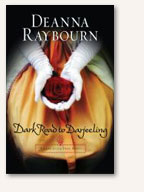
Dark Road to Darjeeling

By Deanna Raybourne

I wasn’t really intending to review this book because it is the fourth in a series that I’d already talked about, but I haven’t posted in a while and I had a serious issue with the conclusion, which I’m going to spoil the hell out of below the break.

But first, some non-spoilers. One thing I really appreciated is that the Dark Road to Darjeeling takes place at least several months after the third book, which is kind of refreshing. So often each mystery novel in a series happens within a week of the last one that it becomes kind of ridiculous how often the main characters run across murders.

Again, like the first few books, the relationship between the hero and heroine kind of wavered for me. Pretty much scene-by-scene I would go between appreciation and irritation. The relationship is very progressive for the Victorian setting (perhaps anachronistically so), but also very repressive by today’s standards, so when I recalled the Victorian setting, I would be impressed with the relationship, but when I compared it to my own relationship, I would get my feminist self all riled up.

Anyway, this book is set in a remote area of India, and I found the descriptions of the setting and various peripheral characters the most interesting of any of the books in the series so far. And, after the mystery was solved, there was an additional twist that didn’t bother me nearly so much as the mystery solution and which bodes for some interesting characterization in the fifth book.

Alright, so now that the pleasantries are taken care of, I’m going to spoil the entire murder mystery of the book after the break. I actually feel a little hesitant to do this, like I’m breaking a reader’s cardinal rule, but here goes:

Continue reading

Death Comes to Pemberly

By P.D. James

I read a very brief mention of this book a couple of days before Christmas, and thought to myself, “I better put a hold on that at the library.” I promptly forgot, of course, but on Christmas Day my wonderful father had bought it for me! I finished Comfort & Joy while on vacation, so was able to crack open Death Comes to Pemberly on the plane ride home.

Basically, Death Comes to Pemberly is an old-fashioned British murder mystery, picking up about 5 years after the end of Pride & Prejudice, centered around the married life of Elizabeth and Darcy. I’m normally a little ambivalent about novels that pick up where other famous novels ended, but a couple of things overcame that for me here: 1) I’m not actually a die-hard fan of Jane Austen, so her writing isn’t as sacrosanct for me as it is for many readers, and 2) P.D. James herself has her own excellent reputation as an author.

I have a vague memory of trying to read some of P.D. James’ other novels before, though I can’t remember which ones, and finding them a bit too…technical is the best word I can come up with, though it isn’t quite right. Anyway, her trying to pick up the style of Jane Austen corrects that for me, softening the prose and the characters, and while she can’t write exactly as Jane Austen does, I think she does a fairly good job of capturing the spirit of the characters. Darcy in particular is a surprisingly sympathetic character, and it is actually really interesting to get his perspective on events.

A not-too-long divergence: I feel like male characters in regency novels, even those written contemporarily, are often inaccessible. I think it is probably an accurate portrayal—that men at that time even more than now were expected to be stoic—but as I’ve gotten older, I’ve realized how very young some of these characters are, and how unsure of themselves they must have been in spite of themselves.

P.D. James actually plays on that a bit, making more overt for modern audiences what Jane Austen might have expected her audience to already know, the responsibilities laid on older sons to carry on family duties at a very young age.

I enjoyed the book so much that I hate to even write a criticism (and I’m not convinced that it is a fault of the book), but an odd occurrence happened enough that I can’t quite overlook it. Several times while reading the book, I would turn the page to continue reading, and have to go back and check that I hadn’t accidentally turned two pages together, that there seemed to be the occasional jump in plot. Now, I should qualify this with mentioning that the entire time I was reading this book, I was recovering from a cold and was pretty well dosed with cold medicine, so I can’t say that I was firing on all cylinders, either.

—Anna

Crooked Letter, Crooked Letter

By Tom Franklin

So, it has been a bit of a rough couple of weeks—holidays are looming and my company has some restructuring coming up—but I will say that Crooked Letter, Crooked Letter is a good book to help you get some perspective on life.

I am stressed about getting all my work and Christmas shopping down, but I am not a poor black boy or a painfully shy white nerd trying to get by as an outsider in the deep South…Oh, wait. I was a painfully shy white nerd in Texas only about 10 years after this book takes place. (Although Austin, though less liberal then than it is now, was still a damn sight more liberal than rural Mississippi, and the mid-90s were just  generally more liberal than the mid-80s, so it’s a bit of a cheap comparison.)

Still, there were several details that did actually remind me of my own adolescence. Very minor spoilers follow:

Continue reading