The Rest of 2013

As I said at this time a year ago, when I really love a book I generally write about it here, mostly so I can tell as many people as possible what to do. So you’ve already read here about the best books I read in 2013: Code Name Verity, Eleanor and Park, Me Before You, and Mr. Penumbra’s 24-Hour Bookstore. But there were plenty of other books that I enjoyed but never got around to reviewing on the blog for one reason or another. Rather than let those slip through the cracks, here are the five best books I read in 2013 that I didn’t already mention on the blog:

1) 11/22/63 by Stephen King.

I am not a Stephen King fan, and this didn’t make me want to read anything else by him. However, I love books about time travel, John Kennedy, the 1960s, and Texas, so it’s like this was written especially for me. It’s way too long, and there are some annoying factual errors–some of them might not be noticeable if you’re not from Texas, but at one point he mentions JFK’s daughter, “Carolyn.” Where was his editor? But it was engrossing and I really enjoyed it, even if if weighs a ton and took forever to finish.

2) Miss Buncle’s Book by D.E. Stevenson

Did you know that you can give someone a book via Kindle, and it will appear on their device as if by magic? I love my Kindle. Anyway, one day I got an email saying that my friend Jocelyn had given me this book I had never even heard of, and it is completely delightful. Written in the 1930s, the book is set in a tiny, picturesque English village where Barbara Buncle has written a book based on the people she knows in town. When the book is published, anonymously, and becomes a hit, the townspeople are not too happy to see themselves in print. The whole thing is just charming.

3) You Don’t Have to Say You Love Me and Unsticky by Sarra Manning

The night before I was leaving for vacation this summer I realized I didn’t have enough to read to carry me through my whole trip, so I frantically got on Twitter looking for cheap e-book recommendations. Someone (I can’t remember now who, but thank you, whoever you were!) said that these were $2.99 on Amazon and were entertaining, and I bought them without knowing anything else about them. And I loved them both! I guess you’d call them chicklit–they’re both romances that involve cool, young, urban (London-based) 20-somethings. But I found them unpredictable, and all the characters were much more complex than I was expecting. I think Unsticky was my favorite, but they were both fun.

4) Going Clear by Lawrence Wright

I am OBSESSED with Scientology. As in, I read blogs and message boards where people who’ve left the church hang out, and follow the gossip like it’s about people I know. It’s all just so INSANE. I’ve read a bunch of books about the church, and this one is definitely the best. It swings between detailing L. Ron Hubbard’s life  and the beginnings of the church, and current day leadership and scandals. It a long, detailed book, and I found every word of it FASCINATING.

5) The Good Nurse by Charles Graeber

Do you ever watch those true-crime TV shows, like Dateline ID or 48 Hours? I love those, and this is like a really, really good one in book form. It’s about a nurse who killed people–maybe dozens, maybe hundreds–during his career, and how he was ultimately caught. A quick, but riveting read, that may make you terrified of even the idea of being in the hospital.

And now I’ve started a new list of Books Read for 2014 and am looking forward to a year of more awesome reading.

Julian Kestrel Mystery Series

By Kate Ross

Book Cover: Cut to the QuickSo, I’ve been having a bit of a rough time over the last couple of weeks with some family medical issues, and as usual, I’ve turned to my main comfort, rereading old favorites. There is nothing quite so comforting as reading a book where you already know everything that happens, so you can give it as much or as little attention as you have to spare at any given time (highly recommended for waiting room waits). You already know the outcome, so there is no anxiety (you probably have enough of that in your actual life already).

All of this to say that I’ve just reread Cut to the Quick and A Broken Vessel, the first two in Kate Ross’ Julian Kestrel mystery series, and they were exactly right for my current mood. The protagonist, Julian Kestrel, is the epitome of a dandy in Regency-era London, focused entirely on his appearance and amusements until he is framed for the murder of a strange woman who appears at the country house in which he is attending the engagement party of a slight acquaintance. In order to clear himself and his valet, an extremely endearing former pickpocket named Dipper, he must uncover the true murderer among his host’s upper-crust family. The plot and characters of Cut to the Quick aren’t anything new in the extremely well-covered genre of Regency-era mysteries, but they are all just so well written that the book and the series really stands out.

Book Cover: A Broken VesselNow, A Broken Vessel is another matter entirely, introducing Dipper’s sister Sally, who shares narration of the book with Julian. Sally is clever, courageous, and a completely unrepentant prostitute, who has stolen a letter pleading for help from one of three men. Sally is wonderful, the mystery is even more intriguing than in Cut to the Quick, but the most interesting thing for me in A Broken Vessel is how it describes the various levels of society in Regency London, with the aristocracy at top, to their servants, to the shop and pub keepers, and finally to the dregs of the crime world, and how people either fall down those layers or claw their way up.

The series contains two additional books, which I read years ago, and haven’t reread yet, though I remember them both as being quite good as well. Our mother first introduced Rebecca and me to the series, and she had a theory on where Ross was taking Kestrel’s character, and we were eagerly awaiting to see if this proved true when unfortunately Ross died, and so no more books in the series will be forthcoming. This shouldn’t dissuade anyone from reading these, though: each book stands alone, plot-wise, though they occasionally refer back to previously introduced characters, and no book ends on a cliff-hanger. You’ll just be sad that there aren’t additional books to enjoy, but you can always just reread these four in times of need.

—Anna

In The Woods

By Tana French

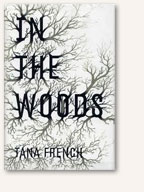
Book cover: In The WoodsI really liked this book: it has a plot that I couldn’t anticipate and building suspense that I couldn’t put down, and the characters are where it really shines. The narrating detective’s female partner, especially, is tough, smart, and likable, and that’s a lot less common than it should be. My favorite passages of the book just follow the various officers working through the minutiae of the investigation. However, there were a couple of issues that kept me from loving it:

First, a pet peeve: I just hate foreshadowing. I know that is an important writing device for building suspense, but I hate it when the narrator says stuff like, “if only I knew then where this would all lead” or “at the time I was so sure I was right.” I just hate it, and this book was chock full of it. I will say that French put it to better service in this novel than I’ve seen in used before, but it still didn’t make me like it. I prefer to advance through the story at the same time as the narrator, and see missteps retroactively as well.

Second, from the very beginning, even on the back cover blurb (so this isn’t a spoiler; the full plot spoiler follows below the cut), it is known that the narrating detective’s past is related to this new crime. Though the book primarily focuses on the present-day murder, the cold case, with the same setting and similar victims, runs as a parallel undercurrent. Our narrator knows he shouldn’t be working this case, but he is obsessed and becomes increasingly unbalanced throughout the book. French does a very good job of subtly depicting his unraveling mentality, and I gradually began losing patience with his growing belligerence and incompetence and all-encompassing self-involvement.

So, I found the actual reading of the book a bit more a chore than I like in my for-fun books, but the twist ending (which I couldn’t even guess at) made it all worth-while, and I want to bring it up because I want to gasp over it with other readers, specifically Kinsey, who recommended it to me and mentions the second and fourth in the series here.

WARNING: I’m seriously spoiling the entire mystery in the following paragraph. Pet peeves aside, I really do recommend this book if you like the grittier-type murder mysteries and suspense, and if you haven’t already read it, you should check it out without my spoiler. Continue reading

Femme Fatales: Femme and A Dame To Kill For

Femme

By Bill Pronzini

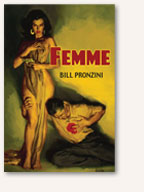
Book Cover: FemmeAh, Bill Pronzini. You were one of my early introductions to pulp mysteries, and I have a lot of left-over affection for you, but I’m afraid I may have outgrown your nameless detective.

I hadn’t read a Bill Pronzini novel in at least 15 years, but I ran across this very short novella in the new releases shelf at the library and picked it up, as I do love a femme fatale! I also had very fond memories of Pronzini’s nameless detective series from high school; they are somewhat run-of-the-mill novels, but are told in first person by a detective who is never named (I was also at the time watching Clint Eastwood’s “The Man with No Name” series, so it was a bit of a theme).

I read Femme in the space of one delayed flight, so probably over 3 hours total, and it was the fluffiest of fluff. I have a bit of a problem with novellas, actually. Whereas authors seem to put extra effort into short stories to be concise and compact as independent entities, novellas have a tendency to just come off as reading like general outlines for a future novel, and this one was no exception.

The plot, characters, and setting were quite generic, which is especially problematic when it comes to a femme fatale. A woman who uses her very femininity to lure men to death and destruction really needs to stand out. This particular femme seemed no different than the average murderess on any given Law & Order episode. I get that it is more difficult to make violence stand out in this modern age, but that’s what makes writing a femme fatale such a challenge.

Now, if you want someone who is up to that challenge:

A Dame To Kill For

By Frank Miller

Book Cover: A Dame to Kill ForFrank Miller’s A Dame To Kill For is the basis for the new Sin City movie coming out next year, and coincidentally the only Frank Miller graphic novel that Rebecca owns. I really enjoyed the first Sin City movie and was torn over whether to read the graphic novel for the second one, and thereby “spoil” it for myself, but finally decided that part of the fun of the movie is seeing what a brilliant job it does of bringing to life each individual illustrated panel. (I saw in a “making of Sin City” that they actually used the graphic novel as the original story boards for the movie, which makes a lot of sense, given Frank Miller’s very cinematic style.)

While it is no spoiler that Frank Miller loves a femme fatale (or ten), I’m going to go ahead and spoil this particular book (and upcoming movie), so proceed with caution. Continue reading

RIP Elizabeth Peters

Elizabeth_Peters
RIP Elizabeth Peters
(Sept. 29, 1927 – Aug. 8, 2013)

I just learned that Elizabeth Peters recently died. Her actual name was Barbara Mertz, but I knew her as Elizabeth Peters when I grew up reading her books.

She was a prolific mystery writer, her characters are a delight, and her writing easily mixed suspense and humor. I particularly loved her sense of character though. Her heroines were all very real, with very definite personalities and perspectives. They were all people that I would have loved meeting, but also that I could have imagined meeting. They were real people and they continue to delight me. The love interests were also all strong personalities that could hold their own against the main characters, and the large casts of secondary characters were always zany and delightful.

I think growing up reading these books provided a wonderful salve to also growing up reading classic science fiction, which tended to skimp on the character side of things, especially when it came to females. Peters’ characters more than made up for the lack in any other books, though. Her were a delight and a wonder.

crocodile-on-the-sandbank   The first book of hers that I read was Crocodile on the Sandbank, which introduced me to Amelia Peabody, Peters’ most well-known character. Peabody is a British female Egyptologist in 1884. As you might guess from that, she is quite opinionated and strong-willed. Watching her butt heads with pretty much everyone is a delight. Amelia along with her eventual husband and eventual son are the focus of 19 books.

borrower-of-the-night-a-vicky-bliss-murder-mystery-by-elizabeth-peters     streetoffivemoons    silhouette

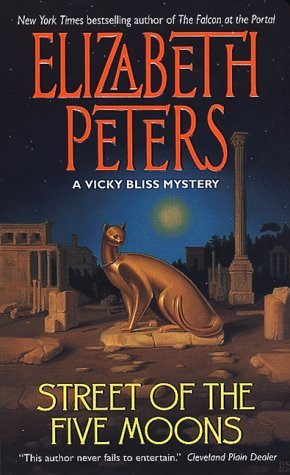
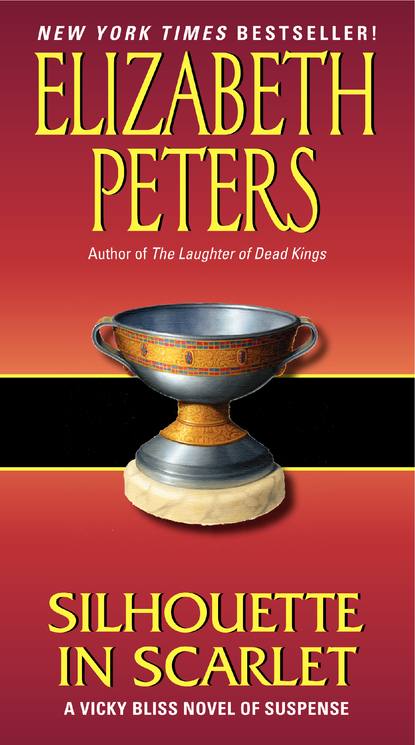
My favorite series of hers though is the one that follows Dr. Victoria Bliss, a medieval arts scholar who works at the National Museum in Munich. Vicky is Barbie-doll-esque enough in appearance that most people don’t take her seriously as a scholar. Her boss Herr Professor Anton Schmidt is Santa-Claus-esque enough in appearance that no one takes him seriously as an adventurer. John Tregarth is a master criminal who tries valiantly to not be taken too seriously. Together they find and/or get drawn into all sorts of historical and criminal adventures.

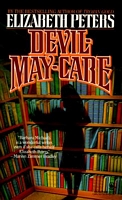
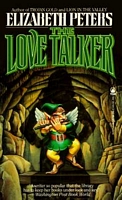
summer_of_the_dragon     devilmaycare     lovetalker

Some of my favorite books of Peters, though, are her stand alone novels, introducing whole new casts of characters and a single mystery to be resolved. Of her many such books, Summer of the Dragon is probably my favorite, closely followed by Devil-May-Care and The Love Talker.

This is an author well worth reading and who has had a major impact on my youth, reading, and writing. She set a high bar for others to follow.

Rest in peace, Elizabeth Peters.

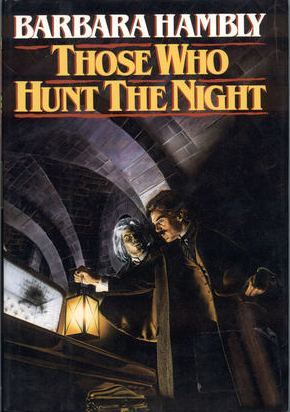
Those Who Hunt the Night

Those_who_hunt_the_nightThose Who Hunt the Night
By Barbara Hambly
1988

This is an excellent vampire book. There are a lot of fun vampire books, but this one is actually good. I love the characters, I love the way they interact, and I especially love the way that the author presents the vampire characters.

The book is set in Edwardian England and our main character is Oxford professor James Asher. He’s living a calm quite life, but has a rather gritty past as a secret agent for the British government. At the start of this book, the vampire Don Simon Ysidro approaches Asher, informs him that (1) vampires exist, (2) someone has been hunting the vampires of London, and (3) Asher is going to be Ysidro’s agent in tracking down the hunter or Ysidro is going to kill Asher’s wife Lydia. The plot progresses from there.

The problem with vampires (as it were) is that they eat people. Humans are their prey. There just can’t be any sort of natural alliances between predator and prey. Most vampire stories hand wave this away: the vampire just feels terrible about it, or refrains from following his natural urges, or some such. This book, though, directly confronts the fact that these vampires kill people; both ‘good’ and ‘bad’ vampires kill people.  The alliance between Asher and Ysidro is necessarily deeply coercive and fraught.

Very much related to the previous point, I like a certain amount of ruthlessness in my characters. I don’t want them to be mean or cruel, but I like characters who are smart and determined and accept personal responsibility for their actions and the repercussions of those actions. Asher, Ysidro, and Lydia are all like this. They have goals and they do what they need to do in order to achieve those goals. They know what risks they take with their actions and they are very careful in how and what they do.

Another wonderful thing about this book and these characters is that Lydia, Asher’s wife, is an excellent character in her own right and the marriage between her and Asher is equitable. They not only love each other but they also respect and support each other. They are honest and forthright with each other. They trust each other, not just to be faithful, but to be capable.

Anyway, the investigation that makes up the actual plot itself was good, but what makes this book shine are the characters and their interactions with each other. I definitely recommend it.

Dark Places

By Gillian Flynn

Book Cover: Dark PlacesDark Places made me feel terrible, but at the same time I read it straight through in just three days, staying up far too late into the nights.

Kinsey has previously reviewed two of Gillian Flynn’s novels, Gone Girl and Sharp Objects, and had recommended Dark Places to our friend Cara. (Kinsey in fact said that when Cara asked for summer reading recommendations, Kinsey, knowing her tastes, combed through all of her recent favorites for the most grim and depressing.) When I went to visit Cara a couple of weeks ago, I picked up her copy to just check out the first few pages. One of the first things I did when I got home was put a reserve on it at my library and then waited with literary withdrawal symptoms (lack of focus, irritability…) for my request to come in.

The book follows Libby Day, the sole survivor at the age of seven of her family’s massacre, supposedly by her older brother in a Satanist sacrifice. At the beginning of the book, she is a severely emotionally stunted adult who simply lives off of the charity donations that accumulated during the news frenzy of her family tragedy. She is nearing the end of her funds when she is contacted by a club of true crime fans who want to pay her to help them prove her brother’s innocence. She agrees solely out of financial desperation but becomes caught up in the investigation herself.

The book seesaws between Libby’s current search for the truth and first-person perspectives from both her mother and brother on the day before the massacre. I mean this as a total compliment, but as I read through it, the sense of doom and accumulating circumstances felt very real, like gathering storm clouds. (This is not a good book for Rebecca.) Like Kinsey described in Gone Girl, as a reader you have no idea how it is going to pan out, and keep wavering in each chapter: did the brother do it? Surely not, but wait, did he, though?

One night, after finally tearing myself away from the book, I was thinking about how insane all of this Satanist stuff sounds, like just completely bonkers, and all of a sudden I remembered it! For those of you who didn’t live through the 80’s, it sounds completely absurd, and it absolutely is, but it was also truly there: this very real fear that there were Satanist cults lurking in every town, just waiting to grab young children off the street and sacrifice them in a violent ritual. It is so ridiculous (and eventually discovered to be totally unfounded) in retrospect that I had completely forgotten about it until this book, and suddenly I remembered as a child, peering into graffitied tunnels (where I’m sure the local teens just went to smoke) and thinking, “that could be a lair for the Satanists.”

It really kind of boggles the mind when this kind of national hysteria occurs, and one of the most powerful aspects of this book is that it really brings home how unlucky individuals can be destroyed before we all recover our senses.

—Anna

The Tightrope Walker

By Dorothy Gilman

Book Cover: The Tightrope WalkerDorothy Gilman is most well known for her Mrs. Pollifax mystery series, but I like her stand-alone books better, and I like The Tightrope Walker best of all. Actually, Mr. Penumbra’s 24 Hour Bookstore reminded me a bit of it, and I meant to mention that in the comments of Kinsey’s review, but I forgot, so I figured I might as well reread The Tightrope Walker and review it on its own. Both books feature a central character who is sort of lost and floating through life without a purpose until they get work in an eccentric shop, and both are drawn into a mystery through an artifact within the shop. How’s that for a very specific genre of books?

Both also have a sort of sincerity in the characters and the message that is not that common in modern books. I am very definitely a Gen-Xer and sincerity mostly makes me super uncomfortable (I am way more at ease with satire and irony), but in both of these books, I find it fresh, original, and charming. The Tightrope Walker is especially impressive, I think, with how it positively addresses the newish movements in feminism, psychotherapy, and new age philosophy in the 1970s. The heroine has childhood trauma that she works through with a variety of processes, but she is so optimistic about every movement and philosophy that as a reader you see the attractions of them all, even the ones that are more scorned today (the love interest is introduced early in the book doing meditation in a portable pyramid). It still reads so modern that every time I read it, I am a bit surprised when the heroine buys some bellbottom slacks.

—Anna

Codex Seraphinianus

codexCodex Seraphinianus
By Franco Maria Ricci
1981

In honor of April Fool’s Day, I am reviewing the Codex Seraphinianus. No, this is not a prank or a lie, at least not on my part. The book exists. Just, well… it’s more like it’s a prank or a lie on the author’s part.

The Codex is an incredibly beautiful and extremely peculiar biology/sociology text in a foreign language. Yeah. Think on that for a bit.

Also, I recommend it.

Regardless of what languages you may be fluent in, this book is in a language foreign to you. It’s actually an alien language constructed as either a code or simply a very detailed doodle by the author, such that the written text is just as much an illustration as any of the actual color illustrations.

The color illustrations, of which there are many, are beautifully done, likely with oil pastels or some such.

codex03  codex7  codex_09

The subject of the book is the biology and sociology of an alien world… an extremely peculiar alien world, with a very complex biology. In some ways it reminds me of a steam-punk universe with cyborgs/implants/etc., except that such mechanical additions are intrinsic to the biology of the plants and animals rather than intentional additions later. (Sort of like WTF-Evolution’s even crazier, acid-tripping brother.)

In other ways it reminds me of the biology from Vernor Vinge’s A Fire Upon the Deep or Orson Scott Card’s Speaker for the Dead. Except more so than either Vinge or Card went.

It also reminds me a great deal of the Voynich Manuscript, a document that I have yet to actually see a good copy of, but which is another biology text written in an unknown language. But the Voynich Manuscript has had professional and amateur codebreakers trying to break it for nearly a century at this point and variously manage to “prove” is (a) a complex code that we just don’t have the key to yet, (b) a brand new language that would need to be translated rather than uncoded, or (c) complete gibberish that contains no meaning and can thus be neither uncoded nor translated. Its provenance is also deeply questionable. It has the potential to be (a) a secret alchemical manuscript from the 1200s, (b) a forgery created in the late 1500s and sold to Emperor Rudolf II as a secret alchemical manuscript from the 1200s, or (c) a forgery created in the early 1900s perpetrated either by or on the book dealer Wilfrid Voynich.

But back to the Codex Seraphinianus, it is vibrant and gorgeous and inspiring and confusing.

If you can get your hands on a copy, it’s a lot of fun.

Or, for a more easily accessible book, check out Chris Van Allsburg’s The Mysteries of Harris Burdick, and try to figure out what the plots are of those stories.

The Round House

Well, Anna and Rebecca deserve awards for continue to slog away at Atlas Shrugged–I mean, my God, will that thing ever end? I, meanwhile, continue to read fantasy stories and romance novels and light, fluffy fun things that make no attempt to develop a new political philosophy. But I did just finish a lovely, quality book that I wanted to mention: The Round House by Louise Erdrich.

Erdrich is known for writing very literary novels about the American Indian experience (I’m using Indian, not Native American, since that’s what Erdrich most often does), often with a hint of magical realism. I’ve tried to read some of her work in the past and never really connected with it, but her latest novel won the National Book Award and was described as a mystery–I was intrigued. And I really enjoyed it!

The story, narrated by a teenage Indian boy, centers around a crime that happens on a Chippewa reservation, and how the main character and his family deal with the aftermath and try to figure out who did it. However, the mystery is secondary, in a lot of ways, to the descriptions of life as an Indian teenager. The details–from what the characters are eating to how they speak–are striking and Erdich does an amazing job of getting inside the head of a teenaged boy, who usually feel to me like they are members of an entirely different species. While this book didn’t have the driving, page-turning quality of Gone Girl, I enjoyed the mystery and the characters, and I would recommend this a starting point for Erdich’s work.

Kinsey’s Three Word Review: Haunting, lyrical mystery.

You might also like: Any of Tana French’s mysteries or, if you’d like to read more about life on a reservation, Sherman Alexie.