By Dan Vyleta
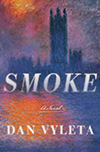 This is a tough review, because Smoke has a fascinating premise, and is certainly well written, but it took me a month to get through it and by the end, I completely hated it. I think it might just be me? Like, it wasn’t the right book for me to read at this time, and forcing myself to continue just made it worse. So, I’m stuck where I can’t really recommend it, but I can’t pan it either.
Set in an alternative Victorian era England, Smoke elaborates on the real life coal smog crisis of the time. The premise is that people’s anger and violent thoughts manifest visually as a sooty smoke emitted from the person’s body, staining their clothes and polluting the world around them. The book opens in a prep school for the children of aristocracy, where an essential lesson is to avoid all ‘smoking’ entirely. The aristocracy apparently do not ‘smoke,’ but our protagonist, Thomas, is both on the fringes of society and has poorly controlled anger.
I was initially vaguely sympathetic to Thomas, though at a bit of a distance, which I first ascribed to being old enough that it is hard to even remember the drama of the schoolroom. However, as the book progressed, I realized that I just didn’t like Thomas very much. He is angry and aloof, and it was difficult for me to get a handle on him to empathize. His best friend, Charlie, is somewhat more likeable, but no more relatable and mostly serves as a foil to Thomas.
Through a combination of coincidence and nosiness, Thomas and Charlie uncover some minor secrets about smoke, which then leads them to a wider conspiracy. The adults around them all have their own agendas regarding the smoke’s role in society, and somehow all of them rely on causing suffering to those considered expendable to a greater purpose. Any characters that don’t try to exploit those around them are written as pathetically naïve and mostly come to a bad end (all animals also come to a bad end). Vyleta does not shy away from the brutality of British colonialism, human experimentation, and extreme poverty, and it all became unrelentingly grim by the end.
It is a very…combative story, with basically everyone in conflict with each other. Even our two protagonists form a love triangle with the same girl, and reflect that it is inevitable that they will fight each other eventually. It felt very masculine, in my least favorite way, so again, it is very possible that a different reader could enjoy it. (I was curious as to who those readers would be, so I did a quick scan of the reviews on GoodReads, and they are…varied. There’s a lot of two to three stars, all starting with “this book has a great premise, but…” and a smattering of confused one and five stars wondering how anyone could either like or dislike this book. It truly is a conundrum of a novel!)
 Saphire Flames
 Diamond Fire
 The Purloining of Prince Oleomargarine
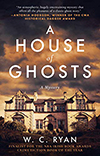 This novel is a murder mystery, spy thriller, and ghost story all in one, and manages to be laugh-out-loud funny, uneasily creepy when reading late at night, and solemnly poignant about the horrors of war. Any of these is a rare achievement, but combining all together make this something really unique. Set in England during the first world war, spiritualism is on the rise, as so many young men are missing/presumed dead on the front.
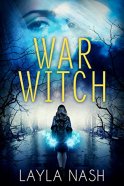 War Witch
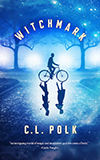 Witchmark is the first of the many library holds I put on books recommended by the Tumblr’s
  Amberlough cut a bit close to our current state of affairs, honestly. Set in a fictional world inspired by 1930s Germany, Cyril DePaul is a secret agent assigned to uncover why an extremely conservative party is winning elections despite low popularity in polls. Collusion and extortion is suspected (sound familiar?), but before he can discover anything Cyril is quickly uncovered by the wealthy industrialists that make up the party leadership, and strong-armed into betraying his employer and government.
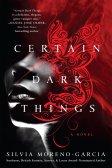 Certain Dark Things
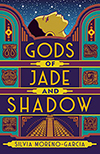 Ooh, this book is so good (and how gorgeous is that cover)! It really does stand as uniquely its own, but all the descriptors I can think of are derivative of other books: it’s like American Gods but gentler, funnier, and somehow just more feminine; it’s got elements of both The Last Unicorn and The Labyrinth, a couple of my favorite pieces of media. Basically, they all have common motifs of mortals discovering the unexpected power they have to either help or resist immortals.
 Biblio-therapy