By Patrick deWitt
 I really like Western movies, but I’m not sure I’ve ever read a book in the genre, actually. I love to see the long shots of empty vistas and close-ups of horses, but am not quite so keen to read about them. I have a suspicion that The Sisters Brothers is not your normal Western, but I absolutely loved it!
It was the title that caught my attention, of course, and I checked it out, just to figure out how to parse it (it is two brothers with the last name Sisters). The Sisters Brothers are infamous gunslingers hired by a mob boss to track down someone who ran with his money. Along the way, they run into various misadventures, and discover that things are not exactly as they’ve been told.
It’s not for everyone, I’d say; the writing was similar to Faulkner’s, I thought, with a plainness that highlights the sort of general absurdity of life, but more plot-driven than Faulkner usually is, which is probably why it is a genre novel, not capital-L Literature. It reminded me a lot of the Fargo television show, actually: a fair amount of extreme violence, but balanced with a quirky humor and some unexpected heart.
Speaking of television shows…
Pocketful of Bones
By Julie Frayn
 Pocketful of Bones is straight-up Bates Motel! Within the first chapter or two, a young prostitute accidentally gets pregnant from a john; when he discovers the baby and threatens to take the child from her, she kills him and buries him the backyard She continues to support herself and her son through sex work, which complicates the son’s adolescent sexual awakening (to put it nicely).
Per the description on the back of the book, eventually things come to a head, when the mom has to rebuff the son’s advances, and he leaves, only returning to the house (and yard) much later. The first half constantly increases the sense anxiety, as the bodies pile up, but tempers it with moments of humor and pathos. As it neared the middle, though, I was sort of gritting my teeth, trying to get past the impending incest-adjacent scene, hoping for a respite from the claustrophobia of the house and yard.
Unfortunately, the damage has been done, and the second half just doubles-down, with two different narratives of disturbed people with the potential to wreck havoc on everyone around them. The anxiety became unsustainable, and I found it increasingly difficult to finish. As an aside: this book is not kind to men in general; almost all victims are men, and while it is debatable whether they deserve to be killed and buried in someone’s backyard, I certainly understood why someone might be tempted to do just that.
 Inspector Guillaume Devré is a closeted gay man in Paris in 1900. He is also extremely cranky and a bit authoritative, so I had less sympathy for him than I’d expected. He’s still an interesting character: torn between his drive for truth and justice, and his own necessary deception.
 I think this might be the type of YA romance that we will see more of, written by and for the millennial generation, and I have to say, I’m here for it! Though it is set in Regency England (and Europe, as the main characters embark on their Grand Tour), it to an extent anachronistically inclusive of diverse races and sexualities. I had a moment of GenX crankiness over it until I realized that no one (including me) is reading this book to get a detailed historical look into the time. It is sweet, flirty, swash-buckling, and just a whole lot of fun!
 Ugh, I can’t believe that it is March already. I’ve been reading a ton, but haven’t done a great job of actually writing the reviews. I’m still having a great time with BookBub’s recommendations, getting most of my recent books from them, and have a fair number back-logged that I need to review. (Which is good, because I’ve also been reading a fair amount of smut, which will not get reviewed here.)
 Building off of Rebecca’s post, here’s another very interesting novella in verse. I was chatting with a friend about the new translation of The Odyssey, for the first time by a woman (which I had first heard about from Kinsey), and the friend asked if it was the same author that did this translation of Antigone. It’s not (The Odyssey, which I look forward to reading, is translated by Emily Wilson, in beautifully crafted plain prose), and I had never heard of Anne Carson, so my friend lent me her copy, and I have to say, it blew me away!
 If my previous review,
  The back cover of the book had blurbs comparing it to both Jane Austen and Georgette Heyer, which makes sense because it features very similar characters and setting. Lucy, is the oldest daughter of a rural rector, who comes from a respectable family (her uncle is an Earl!), but without much money. She is responsible for most of the village duties of her late mother, including visiting the sick in the neighborhood.
 I picked up this graphic novel almost immediately upon entering the floor, and it turned out to be my favorite purchase. The author and artist are both Asian Americans, who had discovered a very short run of what was likely the first Asian American superhero, the Green Turtle. They elaborate more on the source material in the back of the book, but the short version is that it was written by a Chinese American author during World War II, showing allied China defending American against Japanese agents. The Green Turtle himself is kept very mysterious in the original books, and is never given any sort of backstory, which Yang and Liew decide to correct in their update.
 Innsmouth was a close second, though only the first three issues were available (the fourth one has come out in the time it took me to actually post this review), of what will hopefully be a long-running series. (The only drawback to the independent publishing is, who knows how long there will be funding for any given project. If only I were a millionaire!)
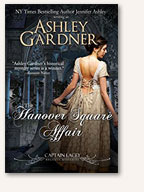 Another good British mystery
 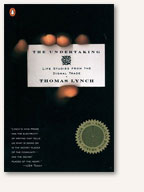 Thomas Lynch describes himself as an internationally unknown poet, though my impression is that is fake modestly for the sake of the mild joke, since from his own accounts he seems relatively well-regarded in poetry circles. More importantly to this memoir-of-sorts, he is a third-generation undertaker in a small Michigan town. I was looking for some insight into how undertakers view death when they deal with it daily and in such a practical way. Lynch kicks the book off with a treatise on funerals that can be summed up with his repeated phrase, “the dead do not care.” It is occasional humorous, but more often, uh, bracing, like cold water or a slap in the face. It isn’t really a pleasant read, but it is an interesting one.
 Biblio-therapy