By Omar El Akkad
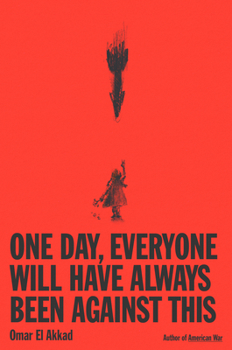
I’ve been checking out so many cozy mysteries and fluffy romances in a desperate attempt to drown out the news, but can’t seem to stick with any of them. I finally decided that the cognitive dissonance wasn’t doing me any good, and I should just face reality directly.
This was a painful read, of course, but I felt relief as well to finally read a direct encapsulation of my growing general discomfort and discontent: “One must also believe that, no matter the day-to-day disappointments of politics, opportunism or corruption or the cavalcade of anesthetizing lies that make up the bulk of most every election cycle, there is something solid holding the whole endeavor together, something great. For members of every generation, there comes a moment of complete and completely emptying disgust when it is revealed there is only a hollow.”
This. This is what I’d been feeling, and then feeling guilty about it, like I was just being fatalistic and giving up, which El Akkad also addresses as a way the status quo tries to harangue people into continuing to toe the general line. This is what I felt working the polls during the 2024 primary, with the justifiably furious voters participating in the uncommitted protest (which is still being ignored and minimalized by the Democratic Party). I tried to explain my sympathy for these voters (and own participation) to more centrist liberal relatives who couldn’t understand why people couldn’t take a ‘rational’ approach of voting for the lesser of two evils, when both parties were literally killing their family members. I only wish I had El Akkad’s eloquence: “What the mainstream Democrat seems incapable of accepting is that, for an even remotely functioning conscience, there exists a point beyond which relative harm can no longer offset absolute evil. For a lot of people, genocide is that point.”
Though I would hesitate to try to categorize this book, I would guess it falls primarily in a cross-section of politics and ethics. However, El Akkad weaves in his family and his own personal experience with displacement and immigration, providing small, individual snapshots that create a necessary balance and foil for when the sheer scale and scope of the genocide becomes too much to take in cognitively. This blend reminded me strongly of Why Are They Angry With Us?, which also bares some stark similarities between how Israel is treating Palestinians and how the USA treats Black Americans.
Mid-book, I had tickets to see Hamilton (which absolutely lived up to the hype 10 years later!), though I wasn’t at all sure I’d be in the right frame of mind for a rah-rah-founding-fathers show. Luckily, it was way more about how messy and deeply flawed the start of this nation was, with unacceptable compromising being made around slavery by people who should have and did know better, or at least that was my takeaway at this point.

