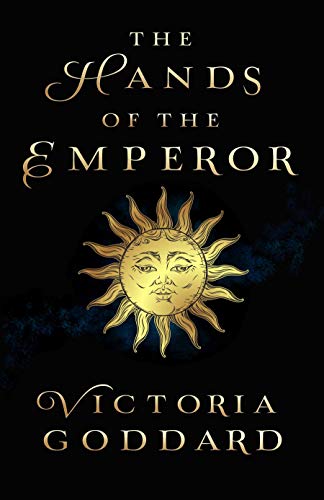
The Hands of the Emperor
by Victoria Goddard
2019
This book is amazing! I blasted through the nearly 1,000 pages over the course of maybe three days and by halfway through was sure that I had another author to follow.
First of all: the world building is amazing. It’s a fantasy setting with elaborate magical issues and multiple cultures – one of which is based off traditional Hawaiian culture, others based off African and/or Asian cultures that I don’t really recognize well enough to fully identify.
It’s a story of legendary events and fairytales happenings – the Empire has fallen, the emperor slept for a hundred years before awakening as the Last Emperor – but all of this has happened and been survived by those who remain and who now must figure out how to carry on afterwards. The background events that we gain more detail of as the book progresses are fascinating, but it’s the people and the personal relationships that are the focus.
Our main character Cliopher Mdang is the personal secretary of the Emperor. He has lived through these events and accomplished his life goals, and now finds himself in a position where power dynamics are severely stressing his personal relationships in both directions: he loves the Emperor but it’s hard to manage a friendship with someone who has god-like powers over him; he loves his family back home in the distant islands but they think he spent years as a secretary in the capital rather than, to all practical purposes, the head of the world government as the go-between between the bureaucracy of government and the god-king emperor.
There are several delightful scenes that involve Cliopher’s extended family being presented with the evidence of what all Cliopher has accomplished. This is the type of scene that is often a climactic reveal in other books, but isn’t here. One of the themes that is addressed in both the political achievements that are slowly revealed in retrospect and the personal achievements that are accomplished as the story progresses, is how everything takes on-going effort: nothing permanent is truly accomplished by a single event – no matter how dramatic. Both relationships and social change take repeated and continuing effort to create and maintain.
It’s also a deeply optimistic book: the Empire has fallen and for all the disasters and deaths that were involved in that, it provided the opportunity to build something better in its place. Cliopher Mdang has spent years working to dismantle the colonial systems of the Empire and create freedom and social safety networks and he has succeeded!
The book is a wonderful thing to read in this time when I am stressed with: a global pandemic, a global climate crisis, a number of humanitarian crisis, and general political disasters. In this world, the highest members of government are working to help people and fix the world and they are succeeding. There’s very little tension in that, no worries that they’ll fail. The driving force to see what happens next is not fear but curiosity as the events get revealed, and the ongoing effort that’s put into creating and maintaining friendships.
The Return of Fitzroy Angursell
by Victoria Goddard
2020
This book continues on just hours after the final events of The Hands of the Emperor, but switches point-of-view characters and also switches tones: it’s wildly hilarious. The theme very much remains the work that has to go into maintaining friendships and how “If we want the rewards of being loved we have to submit to the mortifying ordeal of being known.”
In many ways, it reminds me of TV show Galavant (even to the songs!) but particularly around the way that magic and the power of fairy tales and main characters creates wildly improbable coincidences. But the in-universe explanation of how magic and legend and stories work, makes it all make sense, at least to the point of letting the reader enjoy the ride.
Trying to avoid any spoilers for The Hands of the Emperor, the main character of this book is also particularly hilarious as it highlights the difference between how a person looks from the external perspective and how they look from the internal. Externally, this main character was very regal and reserved; internally, he’s a massive doofus. The whole thing is a delight.
This is definitely an author I’ll be following in the future.


 Biblio-therapy