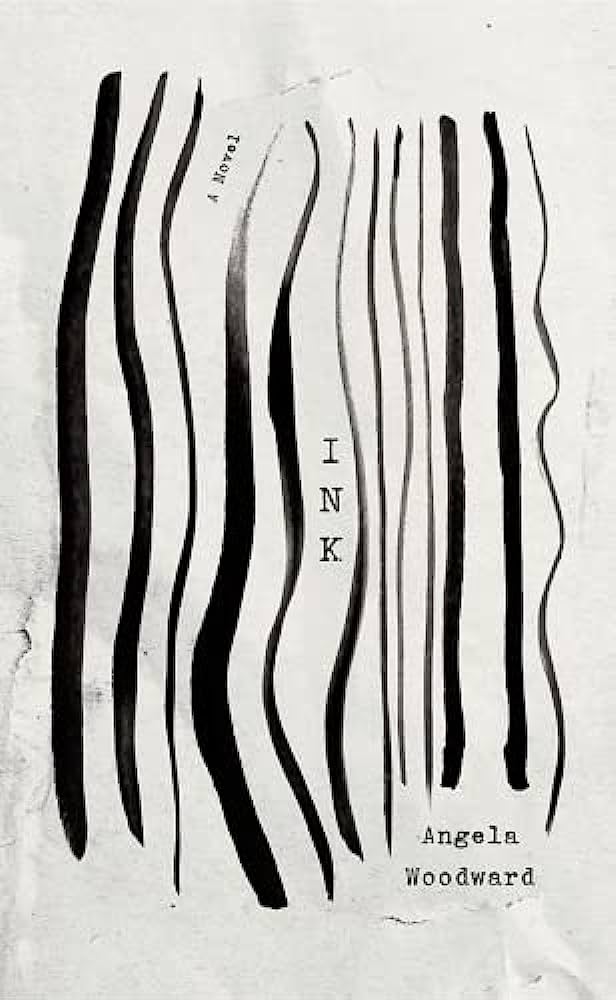
Ink: a novel
by Angela Woodward
2023
Every so often I try reading a literary work and relearn why I don’t read that genre. Woodward is a skilled wordsmith and her writing is lyrical, but her worldview is distasteful and her world-building is poor. Both the characters and the narration are unpleasant in an undeserving way.
I was reminded of a time when I went on a walk with a work friend: we were having a good time mostly window-shopping and chatting in a walking district, when I tripped: stumbled over my own feet, fell to my hands and knees. A few passersby paused but I was fine, I got back up and we continued to walk. The only reason I remember the instance at all is that my work friend said that if that had happened to him, it would have ruined his whole day. He lived in a world where tiny meaningless mistakes could overwrite hours of enjoyment, and the attention of strangers meant critical judgment and inspired shame.
That was his lived experience and I imagine something similar is also Woodward’s experience, and it is certainly her characters’ experience, and it’s such a miserable world to live in: constant judgment both internal and external and no freedom to just enjoy what you can. As Anna pointed out when I complained to her about it: there’s also the meta aspect of Woodward and her characters expecting to be criticized for everything and here I was criticizing them. So it’s not necessarily wrong, but just overly weighted in that direction.
This book is trying to do something interesting, with three different threads: the expected thread of the novel with it’s characters and events, a series of digressions into the history of ink as a substance, and a first-person account of the author discussing her life and writing process for this book.
I found the history of ink fascinating, but untrustworthy. I wish I had read it in a nonfiction book. The first-person accounts I found mostly confusing as to it’s purpose. Perhaps to differentiate Woodward from her even more unhappy characters?
The novel section is what had inspired me to read the book (and not just because that’s the only part that’s in the blurb): it’s about two women who are transcribing the Abu Ghraib detainee statements in the early 2000s. That was around the same time I was doing freelance transcription for various studies in academia: nothing as terrible as first-person torture accounts but enough difficult subjects that I understand some of the impact it can have.
Unfortunately, the book treats the subject as a simple conceit and doesn’t otherwise address it. There are a few short recurring excerpts from those interviews interspersed for shock value, but that was it. At the beginning I thought it was an interesting demonstration of how the mind can shy away from horror by considering more minor aspects: Here’s a single sentence about torture, let us now read several pages on the history of ink. But by the end of the book, as the few repeated excerpts came up, they were treated more like intrusive thoughts to be entirely disregarded, rather than parts of stories that the women were spending days, weeks, months, listening to.
The experience of listening to stories of trauma for hours on end, or even the experience of straining your ears to hear exactly what is said, the click-whirr of the machine, the delight in slow speakers and the difficulty of quick speakers, or the shear physicality of typing all day… None of it was addressed. The characters’ experience was so completely different from mine that it seemed unlikely that Woodward had ever tried transcribing. Or maybe her body, ears and hands all work as differently from mine as her worldview does.
Woodward explicitly states that she was imaging what these people who must have existed would be like, but increasingly it frustrated me that this isn’t at all what they would be like, starting with being English-speaking only. Woodward wrote a novel about two women in an office environment who both have various levels of unpleasantness in their home lives, but the details of their job appeared to have no impact on them whatsoever.
This book had so much potential: a fascinating premise by a talented wordsmith, and it’s really irritating how poor the results were.
 Biblio-therapy