Ilona Andrews Spoilers, part 1

Ilona and Gordon Andrews, who jointly write under the name Ilona Andrews, were at BookPeople yesterday evening and I went to hear their talk and to get a signed copy of their newest book, Gunmetal Magic. The talk was a lot of fun, and their youngest daughter, who was maybe 14-years-old and constantly interjecting comments, was adorable. (The daughter actually kind of reminded me of Lydia from The Lizzie Bennett Diaries… big smile, rolling eyes, and a propensity for teasing her parents.) However, I told Anna that she was probably just as happy not being able to attend, because there were a lot of spoilers.

Thus, the reason for breaking the description into two posts:

This post, part 1, is going to be Anna-friendly, ie, discussing all the books and stories that were published prior to this week. The next post (part 2), will discuss all the books and stories that might be coming down the pipe.

It was interesting to see that Gordon loved talking about the plot twists coming up while Ilona (the individual) didn’t like any possible mention of spoilers, including mentions of facts that were stated in previous published books. However, since I’m going to recount some stories about the writing of different books, there will be spoilers below.

For those of you who haven’t read and don’t want spoilers for AlphaMenz, Magic Bites, or Magic Mourns, don’t click on the spoiler cut below.

Continue reading

The Old Gods Waken

By Manly Wade Wellman

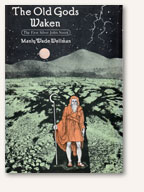
Book Cover: The Old Gods WakenSo, in my continued effort to not have to try anything new, I recently picked up The Old Gods Waken by Manly Wade Wellman, a favorite author of mine in high school. His main protagonist is ‘Silver John,’ a nomadic folk singer who travels throughout the Appalachian area, picking up old songs and stories and tackling the odd supernatural force along the way. (He’s called ‘Silver John’ because his guitar strings are silver.) The cover advertises The Old Gods Waken as Wellman’s first Silver John novel, but he had several books of short stories previously published.

As a teenager, I had been fascinated with the descriptions of the very rural characters and settings, it being unlike anything I’d ever experienced so far, growing up in suburbs of Boston and Austin. It felt so authentic, so…earthy! There was a purity to the simple country lifestyle and I loved it. Even the supernatural elements seemed more realistic somehow, since they were often the product of old folklore.

Today, it reads quite romantic, and I don’t mean that as a compliment. It feels a bit contrived, like the Romantic Period, with all those paintings of pretty, fresh-faced shepherdesses tending flocks of bright white, fluffy sheep. (The first time I saw sheep in real life—a field trip in college—I was appalled at how dirty and kind of mean looking they are.) Wellman’s characters are all perhaps a little too folksy, his settings a little too pastoral, and his dialogue a little too colloquial; the whole thing comes off a bit manipulative and twee.

In a discussion with Rebecca, however, I wondered if perhaps I wouldn’t have felt all of this so strongly in a pre-Palin world, where I hadn’t been inundated with “you betcha’s” for a year or so. Perhaps it is not just me, but that the whole world is getting too cynical for a true appreciation of simplified life in nature. Or perhaps I’m just crabby because it is so damn hot.

— Anna

Too Hot to Read

I’ve been struggling to write an entry the past couple of weeks. It’s been so hot and miserable that I’m hardly motivated to do anything more than slowly sip a cold beverage while staring into the middle distance–even reading seems like a lot of work–and nothing I’ve read lately has been inspiring. I want to tell you about books that I love, but recently every book I come across is one I am basically okay with, they’re all fine, whatever. But other people seem to like all of these books, so let’s do a quick round-up:

Rules of Civility by Amor Towles–This has gotten rave reviews and it seems like something I should love–bright young things in New York City in the 1930s! And I did love the descriptions of what it was like to work as a secretary and eat at the Automat. But the main male character (who I guess I was suppose to be pining over?) was a total blank to me and the best friend seemed like a terrible friend that the main character was better off without. Plus, I felt like we were eternally on the edge of a more interesting story that we never quite got to–the book kept making allusions to the fact that the main character was Russian but had Anglicized her name to get ahead in the world, but we never learned anything about her family or why she did that or what the costs were. I wanted more. If you know the perfect glittering 30s book, let me know.

The Pirate King by Laurie King–This is the latest in the Mary Russell/Sherlock Holmes mystery series (short version: after Holmes retires to the country, he teams up with a young girl and they end up solving mysteries together). I ADORE the first three, but the later ones have seemed lightweight, like generic mysteries that could be solved by any generic characters. The first few books were so enjoyable because Holmes and Russell and their relationship was so clearly drawn, and I feel like that’s been lost a bit. Only for diehards.

Shape of Desire–Remember when I was talking about how much I love Sharon Shinn? I do still love her, but please don’t read this one. I think this is her attempt to get on the Twilight bandwagon, not with vampires, but by setting a supernatural romance-type story in this world. I am on board with supernatural romance, but this one felt like a twenty-page short story blown out into a whole book. Go reread the angel books instead.

Slow Love by Dominique Browning–A memoir about a woman who gets laid of from her job and finds herself seemed like it would be right up my alley. It’s subtitle is “How I Lost My Job, Put On My Pajamas & Found Happiness,” and doesn’t that sound fun? Eh. Way too much of the book was taken up by her whining about a relationship that ANYONE could have told her was pointless, and as far as I could tell, her happiness consisted of her using her enormous severance to retire to the vacation house she already owned. Less inspiring than I had hoped.

Here’s hoping that my upcoming beach vacation results in a whole stack of books I love and can heartily recommend.

Fair Game

By Patricia Briggs

Book Cover: Fair GameA couple of weeks ago, I wrote about the first two Alpha & Omega books, and mentioned that the third one was out in hardcover. Fortunately for me, my new local library had it, so I was able to read it without paying a hardcover price. My expectations were moderate since Briggs has a tendency to lose steam with her ongoing series, but I was satisfied with Fair Game. It wasn’t as well-crafted as Cry Wolf, the first book, but I thought it stood on par with the second book, Hunting Ground, but in a different direction.

Cry Wolf had a really good balance of fantasy and mystery, while Hunting Ground tipped more toward the fantasy, pushing the mystery into the background a little bit and focusing more on the dynamics of the werewolves and vampires. Fair Game goes in the opposite direction, being a pretty surprisingly straightforward murder mystery with the fantasy elements just adding a bit here and there. Now, I really like murder mysteries, so this was a-ok with me, and if given my preference would almost always chose for the mystery to come first and the fantasy second.

I wish I’d thought to mention this in my previous post, but Briggs does this so well that while I really appreciate it, I don’t always notice it, if that makes sense. Her Alpha & Omega books are all written from multiple points of views, changing the narrating voice by chapter, or occasionally within different sections of chapters. It reads a lot more naturally than you’d think it would, with different characters stepping in when they have information that the reader needs. In the previous two books, the narrators have all been werewolves; in Fair Game, for the first time, one of the narrators is a human investigator, which is a refreshing outside perspective and emphasizes the mystery aspect of the story.

Spoiler-y, but not really: the very end does something very, very interesting with the world Briggs is building in the these books, so I’m actually now super-excited for the next books in both this series and the Mercedes Thompson series, which both take place in the same world, since there are going to be some dramatic changes.

— Anna

Alpha & Omega Series

By Patricia Briggs

Sigh.

Sorry about the recent lack of posts. At the beginning of the month, I moved halfway across the country from Boulder, Colorado to the Washington, D.C. area. I was all prepared with three prewritten posts to get me through the chaos of the actual move itself. What I hadn’t predicted is that I would get so overwhelmed with everything being new and different that I would immediately retreat into simply rereading my trashy comfort books, which is what I’ve been doing for the past few weeks at a furious pace.

I’ve reread all five of Ilona Andrew’s Kate Daniels books, which Rebecca has already written about, and both of Patricia Briggs’ Alpha & Omega books, which I figured I’d introduce here, since it could be a little while since I read anything new.

Briggs is better known for her Mercy Thompson series, featuring a female mechanic who shape-changes into a coyote, but was raised by a pack of werewolves. It is your typical werewolf/vampire genre series, but just done far better than most. Whenever I run into Charlaine Harris fans, I always make a point of recommending Patricia Briggs, since Mercy Thompson is everything Sookie Stackhouse isn’t: smart, independent, funny, etc. The first two books are immensely entertaining (I might read them next), and the third one is equally good but delves into some unexpectedly difficult-to-read territory (I am not going to read that next). After that, Briggs seemed to lose interest a little bit, and the subsequent books do not have the same quality of writing and plotting.

However, Briggs then turned her attention to a new series, the Alpha & Omega series, currently with two books in paperback and one in hardcover, which I haven’t read yet because I’m very much against hardcover books. This new series is great! It features peripheral characters from the Mercy Thompson books who are a little darker and tortured, which I always appreciate, and is set smack in the middle of the werewolf pack, instead of on the fringe.

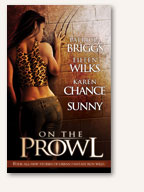
The series actually kicks off with a short story/novella in the book On the Prowl, which is often shelved in the romance section and has a cover that will embarrass you to be seen carrying around. On Rebecca’s advice, I haven’t read any of the other stories in the book, but the Alpha & Omega story is actually good enough to be worth the full cost of the book, in my opinion. (Although, on a side note, the story is available on its own for the Kindle through amazon.com, which is one of the best arguments for a kindle that I’ve heard so far.) The story does set the entire series up to the point that the reader would be missing serious background information if they started with the first full novel.

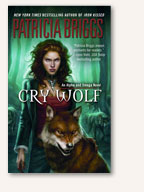
Book Cover: Cry WolfThe first full novel is Cry Wolf, and just really delves into the characters and their relationships with each other, all within the confines of a very well structured and paced narrative. The second novel, Hunting Ground, doesn’t have quite the same tight plot structure, but is still very entertaining. I’m somewhat afraid I’m seeing a bit of a pattern with Patricia Briggs, so I’m mentally preparing myself for the third book being a potential disappointment, but I’m still very much looking forward to reading it. Right at this moment, I’m more into comforting fluff books than quality, so I’m sure it will live up to that.

— Anna

Troubled Waters

Last week I read A Visit From the Good Squad, Jennifer Egan’s Pulitzer Prize-winning novel, and it was fine. It was well-written and had a very interesting structure (moving back and forth between characters and time periods) and the famous chapter told in PowerPoint slides was quite affecting. But everyone in the book seemed miserable and my main reaction was to wonder if most people in the world are really that unhappy, because I am not and most of the people I know aren’t. Are all the sad, mean people just clustering together in literary novels? So while I would be happy to discuss Goon Squad more in the comments if anyone else has read it, what I want to talk about instead is the next book I read, Troubled Waters by Sharon Shinn.

I love Sharon Shinn. When I’m poking around on Amazon or on my library’s catalog and realize that she has a new book coming out, I have been know to let out a little squeal of happiness. Her books generally follow a predictable pattern–they are virtually all fantasy stories in which a strong female lead character has to overcome some of obstacle and falls in love along the way. There are often royal families involved, and magic, the characters generally have to come to understand and embrace the powers they have. But don’t think I’m complaining about the books all having mostly the same plot–they’re great! There’s action and romance and excitement and well-drawn characters, and I know that I am going to be satisfied and will enjoy every minute. There’s also a nice feminist foundation underneath it all. The books aren’t explicitly about women overcoming their oppression by men but you get the clear sense that the author is a feminist, and her female characters are fully-realized people.

It can be tricky to figure out where to start with Shinn’s books, because she’s written a ton. There’s a series of middle-reader books that starts with The Safe-Keeper’s Secret, which are fine but a little young for my tastes, and a number of stand-alone books including a futuristic re-telling of Jane Eyre. But the ones I love, and where I would recommend someone start, are the Samaria series and the Twelve Houses books. These are both multi-book series set in two different universes. The Samaria books are about, well, angels. I don’t want to give too much away, but that series has a slightly more sci-fi twist and includes some entertaining Biblical references, even though it is really not at all religious. The Twelve Houses books are a little more traditional fantasy stories about kings and queens and knights and magicians, but I find them nicely grounded with a focus on the people involved and their emotions. I vastly prefer these kinds of stories when they are told on this smaller scale, especially when compared to Game of Thrones-esque enormous epics that seem more interested in the politics rather than the people.

Now that I’ve got all that explained, Troubled Waters isn’t in either of those series, but I’m hoping it’s the start of a new one. It’s the story of Zoe, a young girl who lives with her father in a tiny village far from the capital of her land. When her father dies (which happens on about page 2, no spoilers), one of the leaders of the country appears to take her back to the capital so she can marry the king, and things all spin off from there. There is royal intrigue and magic and a love story and I found the whole thing just charming. The conceit of of the magic in this book is that it is centered around the elements. Zoe has a particular affinity for water, but it feels like Shinn is setting things up for additional books to follow stories of the other elements. As you can probably tell from how brief my review is, Troubled Waters is not breaking any new ground, but I will happily read as many books about this world as Shinn wants to write.

Short Story Glut

I really like collections of short stories – I think they are a great way to get introduced to new authors and to see a lot of different authors’ perspectives on a shared topic. However, I’ve started to get irritated with these collections recently published that all feature a subset of the same best-selling authors the fantasy genre. It seems like such a blatant money-grab.

I love Patricia Briggs but do not care for Charlaine Harris, so instead of just publishing a book of Briggs’ stories, there is always one of hers in a collection that also includes Harris and other authors I have no interest in. And, I’m sure fans of the other authors feel that way about Briggs. So, this seems like a very calculated ploy on the part of the publisher to try to make us all buy books in which we are only interested in about a quarter or even less of the content (especially disappointing if that quarter turns out to be not all that great, either).

I fell for it and bought two such collections, but wizened up this time and went to the library, and am very glad I did. I originally intended to gather all of Patricia Brigg’s short stories that I hadn’t already read, but an Ilona Andrews story slipped in, too.

Book Cover: Naked City1) Naked City, with the tagline “Tales of Urban Fantasy,” has a nice theme of each story being set in a recognizable city that the author gives some attention to describing. Of the five stories I read (out of the 20 in the book), four of them featured plots that were very specifically tied to a feature of the city, which was very interesting. Oddly, though, the fifth, Melissa Marr’s “Guns for the Dead,” was actually my favorite, taking place in an Old West type environment that is kept somewhat generic purposefully for the plot reveal.

Patricia Briggs’ “Fairy Gifts,” was my second favorite, of course, with new characters for her and set in Butte, Montana, which is just so interesting to read about given the complete lack of romanticism around that city. Briggs clearly loves the area, though, and writing about immortal beings such as vampires and fairies allows her to delve into the history of the place.

Book Cover: Home Improvement2) Home Improvement: Undead Edition, with the tagline “All-new Tales of Haunted Home Repair and Surreal Estates,” also features Patricia Briggs and Melissa Marr, and theirs were the only stories I read out of the twelve. This theme didn’t work as well – perhaps it was too specific? Again, Marr’s story edged out Briggs’.

Marr’s “The Strength Inside” features a protagonist of a supernatural kind that I didn’t recognize from any of the normal Western mythologies. I’m not sure whether she was dipping into a more esoteric mythos or whether she invented it herself, but it was interesting either way. And, it is about battling Home Owners’ Associations, which is always entertaining, even if a little clichéd.

Brigg’s “Gray” features a vampire, though not one of her regular characters, buying and renovating an old condo. It has some very sympathetic characters, but isn’t anything original.

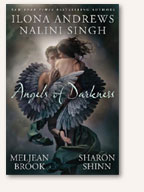
Book Cover: Angels of Darkness3) Angels of Darkness features Ilona Andrews, and was the most worrisome to me when checking it out. The cover looks more like paranormal romance than fantasy, and I knew that Andrews’ books walk that line more than my other favorite authors. And, I was absolutely right to be worried, though it was even worse than I feared.

You know how people criticize the story “The Beauty and the Beast” for basically being a romaticization of Stockholm Syndrome? Imagine Ilona Andrews tried to take that idea, make it super overt, but still try to keep it romantic. It is even more appalling than you are imagining right now.

At 124 pages, her “Alpha: Origins” story is more of a novella than a short story, and is set in a different universe than either her Kate Daniels series or her Edge series. It took me almost a week to finish it because I kept having to put it down because it made me feel kind of dirty, reading about this level of subjugation in a clearly romantic plot.

It reminded me of a call for submissions of fantasy romance books by a publisher that Rebecca told me about. They specified that the story had to feature an older or in some other way societally superior hero and the heroine had to be somehow in his power. It made me gag a little bit.

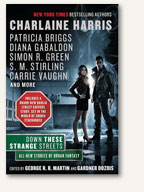
Book Cover: Down These Strange Streets4) Down These Strange Streets was my favorite collection, leaning toward the noir side of urban fantasy and mystery. There were some really terrific stories, and some not-so-terrific stories, but the great thing about a collection of short stories is that after a couple of uninspired pages, I can just move on to the next story.

It did bring home the point that a good noir mystery is harder to write than people think; the author has to somehow steep the entire story in a casual grimness. A surface gloss of darkness doesn’t cut it, and is quickly recognizable when reading a series of stories by different authors all in a row.

Once again, though, Briggs’ story took second place, this time to a really engrossing story by Laurie R. King, who I had previously known only as a mystery writer. Her fantasy mystery, “Hellbender,” was subtle, realistic, and unfolded with perfect plotting, and I would love to read a full book of the same characters and universe.

Briggs’ story, “In Red, with Pearls,” was my favorite of hers that I read in this glut, and featured one of her regular but peripheral werewolf characters, Warren, and his boyfriend Kyle. The short story structure didn’t give her as much time to explore characters and relationships as I would have liked, but was still a very entertaining mystery.

* * * * * * * * * *

Kinsey’s very acute analysis of her preference in memoirs made me revisit my short story collection preferences, and I think it is very similar. The more collections I read, the more I respect the editors. It seems like they need to tread a very fine line, where collections should have a common theme that tie all the stories together, but not such a narrow theme that the stories seem repetitive. “Urban fantasy” is too generic; “house renovations” is much too narrow.

—Anna

Jane Slayre

By Charlotte Brontë and Sherri Browning Erwin

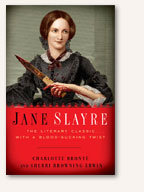
Book Cover: Jane SlayreI read Pride and Prejudice and Zombies a few years ago and was not impressed. It felt like a very awkward mash-up, like just reading Pride and Prejudice, and then BOOM, ZOMBIES, and then back to Pride and Prejudice. It was very disjointed, with the inserted zombie scenes feeling unrelated and jarring in the rest of the text. Once I finished, I just wanted to read Pride and Prejudice without zombies.

Happily, Jane Slayre is significantly better. There are a number of possible reasons for this, and I can’t quite tell which ones actually apply and whether it is due to the author or myself as the reader:

  1. Sherri Browning Erwin understands Bronte’s voice better than Seth Grahame-Smith understands Jane Austen’s.
  2. Jane Eyre already has a gothic sentiment that lends itself better to the addition of vampires/werewolves/zombies than Jane Austen’s comedy of manners.
  3. I don’t actually remember Jane Eyre all that well, so it was harder for me to recognize when deviating scenes started.
  4. I also didn’t enjoy reading Jane Eyre as much as Pride and Prejudice, so wasn’t as disturbed by the added scenes, and didn’t have any inclination to reread the original.

I will say this, though: especially with the added vampires, Jane Eyre/Slayre comes across as the Twilight of 19th century with a fairly Mary-Sue-ish young woman (she isn’t traditionally beautiful, but everyone who sees her compares her to a fairy or some other elven creature) teaching an older and extremely rude but wealthy man how to love again.

However, the Slayre part (so clearly borrowed from Joss Whedon that it could possibly be grounds for a lawsuit if he were so inclined) gives Jane some added spunk and value as a character, and makes the admiration of all around her make more sense. Erwin weaves the vampires (and zombies and werewolves) throughout Jane’s entire story, so it does become an established part of her character.

I even thought several times that the additions Erwin made were interesting enough that they could have been the basis for a quite interesting original book, if she had only taken Jane Eyre as a inspiration and hadn’t had to stay so close to the original.

—Anna

Angelology by Danielle Trussoni

In my last post I mentioned how much I liked my book-a-day calendar, but I didn’t say that one of my favorite parts of the calendar is its tiny book reviews. The pages on those calendars are small so they only get a couple of lines to describe each recommendation, but they do a great job capturing the essence of the book. For example, the calendar said that Angelology was like a cross between Dan Brown and Umberto Eco, and that is a great description.

The premise of Angelology is that the angels of biblical times took human wives, resulting a race of divine beings called Nephilim who live amongst humans. But these are not happy guardian-type angels–the Nephilim have no souls and have been manipulating and oppressing humanity for centuries. Angelologists (a word I’m glad I could just read and didn’t have to say out loud) are the scholars and adventurers who dedicate their lives to fighting the Nephilim’s efforts to exterminate humanity. Oddly, their efforts seem to involve a lot of research in Latin. Two stories run in parallel throughout the book–a modern-day tale of a young nun and a historian trying to unravel a mystery, and a series of flashbacks to a story of angelologists working in Nazi-occupied France. Angelology is far better written than a Dan Brown book, but it does have that element of trying to solve a mystery through the use of medieval relics.

Things I particularly liked about the book:

1) Trussoni creates a very complete world where the existence of angels has been smoothly worked into historical reality.

2) The WWII characters were compelling and the descriptions of Vichy France were fascinating.

3) Most of the modern-day story takes place in New York City, which I really like reading about.

4) Depending on how you read it, the ending was open-ended in a way I found satisfying and true to a complex story.

Things I did not like:

1) The book was long. It felt long. I suspect a good editor could have cut 100 pages out without losing a thing.

2) The modern-day characters seemed flat to me–the young nun, in particular, felt really implausible.

3) There were a number of things about the Nephilim world that didn’t really make since to me. Like, they have servants from lesser angelic classes that are never really explained? And I guess that the Nephilim’s ultimate goal is to completely exterminate humanity, but they don’t seem to be working towards that end with much enthusiasm (despite a relationship with the Nazis). I said that the world felt complete, and it does, but the more I think about it the more cracks appeared around the edges.

4) Depending on how you read it, the ending set things up for a sequel and I feel like I’ve read enough about these people and don’t need another book.

This wasn’t a perfect book, but it was interesting and ambitious. And I’d far rather read a flawed, ambitious book than a technically-adept dull book.

Baltimore; Or, The Steadfast Tin Soldier and the Vampire

by Christopher Golden and Mike Mignola

Book Cover: Baltimore; Or, The Steadfast Tin Soldier and the VampireI heard about this “illustrated novel” when I read Baltimore: The Plague Ships during my comic book glut a few weeks ago. I wasn’t quite sure what an illustrated novel was, but figured that since I liked illustrations and novels, it was probably for me. Also, while I enjoy comic books, I actually like novels better, so I figured that if I really liked Baltimore the comic book, I was going to love Baltimore the novel. You’ve probably already figured out from this lead-up that I did not.

There were a couple of issues, and I think the main one is that there is a reason that comic books/graphic novels and novels are two distinct mediums. They have significantly different narrative structures, and it is the rare author who can work in both (even more kudos to Neil Gaiman, then). In graphic novel Baltimore, the art and text worked together seamlessly and each provided content that the other lacked.

In illustrated novel Baltimore, the illustrations were small, simple black-and-white woodcut-style illustrations that kind of floated in the text on every few pages. I had imagined that they would be full color, full page reproductions of paintings, something even more impressive than the art in the graphic novel, something to distinguish it from the graphic novel and justify having a medium called an illustrated novel. (Thinking it over, Miss Peregrine’s Home for Peculiar Children better matches my idea of the definition.)

I can’t be entirely impartial on the written content because it was in a style that I find particularly difficult to read: characters telling stories. The majority of the novel consisted of three friends of Lord Baltimore sitting in a pub, telling stories about themselves and their relationship to Baltimore, while waiting for him to meet them. Sometimes, while telling stories about their past, their past self would then tell a story! It all got very convoluted, and that kind of flashback narrative lacks a sense of action and urgency to me.

It read like almost the opposite of a graphic novel, which has to be mostly action-oriented in order to support engaging illustrations. This came as a bit of a shock to me, but in retrospect, it kind of makes sense. For a dedicating author of comic books and graphic novels to try his hand at writing a full-length novel, the author must want to try something different, to write something that couldn’t be supported in a comic book structure.

Christopher Golden and Mike Mignola’s effort feels like what it probably is: an amateur attempt at an unaccustomed medium. They didn’t know a whole lot about writing novels, but they knew that novels were different than comic books, so they wrote something as different as possible.

—Anna